From Atoms to Matter: How Structure Determines Behavior
How models of the atom evolved, how electrons fill orbitals and drive the structure of the periodic table, and how the forces between particles determine bonding, native states, and physical properties
Explore the scientific theory of atoms by describing changes in the atomic model over time and why those changes were made.
SC.912.P.8.4
Explore the scientific theory of atoms by describing the structure of atoms in terms of protons, neutrons, and electrons; differentiate among these particles in terms of mass, electrical charge, and location.
SC.912.P.8.5
Relate properties of atoms and their position in the periodic table to the arrangement of their electrons, including electron configuration.
SC.912.P.8.1
Differentiate among the four states of matter in terms of energy, particle motion, and phase transitions; connect to native states of elements and the hierarchy of interparticle forces.
SC.912.P.8.2
Differentiate between physical and chemical properties and changes of matter; apply to how metals, nonmetals, and metalloids differ in bonding and physical state.
SC.912.P.10.18
Explore electromagnetism; compare different parts of the electromagnetic spectrum in terms of wavelength, frequency, and energy; relate to atomic emission spectra and the quantum model.
SC.912.P.8.7
Interpret formula representations of molecules and compounds; connect to the octet rule, ion charges, and bonding types.
Lesson 1: How Models of the Atom Evolved
You seal a glass jar containing a large ice cube and weigh it. After the ice melts completely into liquid water, you weigh the sealed jar again. The mass is exactly the same. This simple observation, first formalized by Antoine Lavoisier as the Law of Conservation of Mass, was a crucial clue for early chemists. It suggested that even when matter changes its appearance, something fundamental is conserved. This led them to ask: what are those fundamental, unchanging building blocks of matter? This lesson traces the journey of how scientists used increasingly clever indirect evidence to build, test, and ultimately revise their models of the atom.
What is a Scientific Model?
In science, understanding grows as we gather new evidence. A Scientific Model is a simplified representation of a complex reality, such as the atom, used to explain observations and make testable predictions. A scientific Law describes a consistent observation but doesn't explain why it happens. A Theory is a well-substantiated explanation for why phenomena occur, supported by a large body of evidence. When a model fails to explain a new experimental result, it must be revised or replaced — a sign of science's strength, not weakness.
Dalton's "Billiard Ball" Model (1803)
The first truly scientific model of the atom was proposed by English schoolteacher John Dalton in 1803. By carefully measuring the masses of gases before and after reactions, he found that elements always combined in simple, whole-number mass ratios — a pattern that made no sense unless matter was composed of indivisible, discrete particles. Dalton proposed that all matter is made of tiny, indivisible, and indestructible spheres he called atoms.
Dalton's model successfully explained the Law of Conservation of Mass (chemical reactions merely rearrange indestructible atoms), the Law of Definite Proportions (a given compound always contains atoms in a fixed whole-number ratio), and allowed him to derive the Law of Multiple Proportions (when two elements form more than one compound, the mass ratios of one element relative to a fixed mass of the other are small whole numbers — as in CO vs. CO2).
Dalton's Tenets: Still True
Dalton's Tenets: Proven False
All matter is composed of atoms.
Atoms are indivisible. (They are made of smaller subatomic particles.)
Atoms of different elements have different properties and masses.
All atoms of a given element are identical. (Isotopes of an element have different numbers of neutrons.)
Compounds are formed by a combination of different kinds of atoms in fixed, whole-number ratios.
Atoms cannot be created or destroyed. (Nuclear reactions can convert atoms of one element into another.)
A chemical reaction is a rearrangement of atoms.
Thomson Discovers the Electron (1897)
For nearly a century, atoms were thought to be the ultimate, indivisible building blocks of matter. That changed in 1897 with J.J. Thomson's systematic experiments using a Cathode Ray Tube (CRT). A CRT is a sealed glass tube from which nearly all air has been evacuated, with two metal electrodes sealed inside. When a high voltage (thousands of volts) is applied, a mysterious glowing beam travels from the negative electrode (the cathode) to the positive one. Earlier scientists had debated whether this "cathode ray" was a form of electromagnetic radiation or a stream of particles.
Thomson's key experiment was to place charged metal plates above and below the tube and apply magnetic fields. The beam was deflected toward the positively charged plate, proving the beam carried negative charge. When he changed the metal used for the cathode or the gas in the tube, the deflection was identical — proving these negatively charged particles (later named electrons) were a fundamental component of all atoms, not specific to one material. He also measured the ratio of charge to mass (e/m), finding the electron was approximately 1,836 times lighter than the lightest known atom.
Thomson's Cathode Ray Tube. The beam bends toward the positive plate, proving cathode rays are negatively charged particles (electrons) found in all matter.
Millikan Measures the Electron's Charge (1909)
Thomson had measured the ratio of charge to mass (e/m) for the electron, but not the actual charge. American physicist Robert Millikan closed this gap with his elegant Oil Drop Experiment (1909). He sprayed a fine mist of oil droplets between two electrically charged metal plates. X-rays ionized the air, causing droplets to pick up electrons and acquire a negative charge. By adjusting the voltage between the plates until a droplet was suspended motionless — the upward electrical force exactly balancing the downward force of gravity — Millikan could calculate the charge on that droplet. After measuring thousands of droplets, he found that all charges were exact multiples of a single fundamental value: 1.602 × 10⁻¹⁹ coulombs. This is the fundamental unit of charge, e — the charge of exactly one electron. Using Thomson's e/m ratio with this value, the electron's mass was calculated to be 9.11 × 10⁻³¹ kg.
Why It Matters
Millikan's result was one of the most precisely determined physical constants of his era. Knowing the electron's charge and mass meant that scientists could now calculate exactly how many electrons an atom contains, making the structure of the atom quantitatively precise for the first time.
Thomson's Plum Pudding Model
With the electron discovered, Thomson proposed the first model of atomic internal structure: the Plum Pudding Model. In this model, the atom was envisioned as a sphere of diffuse, uniformly distributed positive charge — the "pudding" — with negatively charged electrons embedded randomly throughout it, like plums in a pudding. The positive charge was believed to be spread smoothly throughout the volume of the atom, with no dense central core. This model was the simplest way to explain the simultaneous presence of positive and negative charges within a neutral atom.
Rutherford Discovers the Nucleus (1909–1911)
To test the Plum Pudding model, Ernest Rutherford — a former student of Thomson's — devised one of the most dramatic experiments in science. He fired a beam of alpha particles (helium nuclei: 2 protons + 2 neutrons, charge +2, mass ≈ 6,640 times greater than an electron) at an ultrathin gold foil only a few atoms thick. Hans Geiger and Ernest Marsden detected where the alpha particles landed using a zinc-sulfide screen that flashed when struck.
According to the Plum Pudding model, the positive charge was spread so diffusely that it should barely slow the heavy, fast-moving alpha particles. The prediction was near-complete pass-through with only tiny deflections — like a cannonball through tissue paper. The actual results were shockingly different.
Figure 1.2: Rutherford's Gold Foil Experiment and the Discovery of the Nucleus
Alpha particles (+2) fired at ultrathin gold foil pass mostly undeflected through empty space, while rare direct hits on the dense positive nucleus rebound at extreme angles.
Animated walkthrough of Rutherford's experimental setup, observations, and the inescapable conclusion: a tiny, dense, positively charged nucleus at the center of every atom (~5 min).
Rutherford's actual observations: roughly 1 in 8,000 alpha particles deflected at angles greater than 90°, and a small number bounced almost straight back. Rutherford famously said it was "as surprising as if you fired 15-inch shells at tissue paper and they came back and hit you." His inescapable conclusion was the Nuclear Model: almost all of an atom's mass and all of its positive charge is concentrated in an extremely tiny, dense central core called the Nucleus. The vast majority of the atom's volume is empty space through which electrons move.
Quantitative estimates from the deflection angles showed the nucleus to be approximately 10−15 m (1 femtometer) in diameter, while atoms are approximately 10−10 m (0.1 nanometer) — a scale difference of 100,000. If an atom were scaled to the size of a football stadium, the nucleus would be a marble sitting on the center of the field.
Two Major Problems with Rutherford's Model
Rutherford's Nuclear Model was a huge step forward, but it immediately raised two serious, seemingly fatal problems.
Problem 1 — The Missing Mass and Chadwick's Neutron: When chemists added up the mass of an element's protons, they found the total was significantly less than the element's actual atomic mass. Helium has 2 protons, but its atomic mass is approximately 4 u — roughly double. There had to be another, electrically neutral particle in the nucleus contributing mass but no charge.
The mystery lingered for 20 years. In 1930, German physicist Walther Bothe found that bombarding beryllium metal with alpha particles produced a mysterious, highly penetrating radiation that carried no electric charge — it wasn't deflected by electric or magnetic fields. In 1932, British physicist James Chadwick conducted a brilliant series of experiments at Cambridge. He found that this neutral radiation could knock protons straight out of paraffin wax — a hydrogen-rich material. By measuring the speed of the ejected protons and applying conservation of momentum, Chadwick calculated that the neutral radiation must consist of particles with almost exactly the same mass as a proton. Crucially, because these particles carried no charge, they could penetrate deep into the nucleus without being repelled. Chadwick had discovered the neutron — the missing nuclear particle that had been hiding for 20 years.
The Discovery of the Neutron by James Chadwick (1932)
Tyler DeWitt covers how alpha bombardment of beryllium produced a neutral radiation, how that radiation knocked protons out of paraffin wax, and how the conservation-of-momentum calculation proved the neutron's existence (~10 min).
Problem 2 — The Classical Collapse: According to Maxwell's Equations of classical electromagnetism, any charged particle moving in a curve is accelerating. An accelerating charge must continuously radiate electromagnetic energy. A classical orbiting electron should therefore radiate energy continuously, spiraling inward and colliding with the nucleus in approximately 10−8 seconds — making stable atoms thermodynamically impossible. Yet atoms are clearly stable. This failure of classical physics demanded a fundamentally new framework.
Planck's Quantum Hypothesis: The Key Breakthrough
The resolution came from an unexpected direction. In 1900, German physicist Max Planck was working on a seemingly unrelated problem: why hot objects glow with the colors they do. Classical physics predicted that a perfect absorber/emitter of radiation (a "blackbody") should emit infinite energy at short wavelengths — an absurd result called the ultraviolet catastrophe. Planck solved this mathematically by proposing a radical hypothesis: that energy is not emitted continuously, but only in discrete packets (which he called quanta). Each quantum of energy E depends on the radiation's frequency ν through the equation:
E = hν
where h = 6.626 × 10⁻³⁴ J·s is now known as Planck's constant. Planck initially thought this was just a mathematical trick, not a physical reality. But the quantization of energy turned out to be one of the deepest truths in nature, and it would become the key to understanding why electrons don't spiral into the nucleus.
Atomic Model Evolution: A Summary
The evolution of the atomic model. Each model was replaced when new experimental evidence that it could not explain was discovered. Each discarded model was a necessary stepping stone, not a failure.
Bohr's Model and Atomic Line Spectra
How do scientists know what is happening inside an atom they cannot see? They use spectroscopy — the study of how matter interacts with light. When light from a hot incandescent bulb passes through a prism, it separates into a continuous spectrum (a complete, unbroken rainbow). But when the light source is a tube of energized gas, the prism reveals a line (emission) spectrum: a series of discrete, sharp lines of specific colors against a dark background, unique to that element — a kind of atomic fingerprint. Johann Balmer found a mathematical formula for hydrogen’s visible lines in 1885, and astronomers observed identical patterns in distant stars.
The most compelling evidence for Bohr’s planetary model was its perfect explanation of the hydrogen line spectrum. When hydrogen gas is energized (by heat or electricity), it emits light at only four specific visible wavelengths. Passed through a prism, these appear as four bright colored lines: red (656 nm), blue-green (486 nm), blue-violet (434 nm), and violet (410 nm). Bohr’s model predicted the exact energies of these lines by calculating the energy difference between specific pairs of electron orbits.
In 1913, Danish physicist Niels Bohr realized the profound implication: the existence of discrete lines meant that the energy within an atom must be quantized. Bohr proposed a planetary model in which electrons travel in fixed, circular electron orbits he called principal energy levels (n = 1, 2, 3, ...). When an electron absorbs exactly the right amount of energy, it jumps from the ground state (lowest-energy orbit) to a higher excited state. It quickly falls back, emitting a photon whose precise energy — and therefore color — equals the exact energy difference between the two levels. Bohr’s model perfectly predicted the hydrogen spectrum.
The hydrogen Balmer series: four discrete lines of visible light. Each line corresponds to an electron falling to the n=2 orbit from a higher orbit. Bohr's model predicted these wavelengths exactly, validating quantized energy levels.
Bohr's model of the hydrogen atom with the four visible Balmer transitions drawn in. Each of the four spectral lines above comes from one electron falling from a higher orbit down to n = 2 (the orbit highlighted in green); the energy lost during the jump becomes a single photon of exactly that color. The smallest visible jump (n=3 → 2) produces red 656 nm, and the largest (n=6 → 2) produces violet 410 nm. Falls all the way down to n = 1 (the Lyman series, ultraviolet) and falls ending at n = 3 (the Paschen series, infrared) also happen, but their photons are outside the range human eyes can see. Bohr calculated every one of these wavelengths exactly — the quantitative triumph of his model.
▶ Video — Hydrogen Emission Spectrum and Bohr's Model
Hydrogen Emission Spectrum — How Bohr's Model Explains Line Spectra
Explains how hydrogen's discrete emission lines arise from quantized electron energy levels, and how Bohr calculated the exact wavelengths of each line (~11 min).
🔬 Simulation — Bohr Atom Energy Levels
Element: Level (n): 1
State: Ground (n=1)Energy: −13.6 eVPhoton: none
Bohr Model Electron Transitions
Interactive Guide: Select an element (H, He, Li, Na) and a target energy level (n = 1 to 6) using the slider, then click "Excite Electron". The valence electron absorbs energy to jump up, then falls back down to the ground state — emitting a photon whose color and wavelength match the exact quantized energy gap.
💡 Using the PhET "Models of the Hydrogen Atom" Simulator
Why waiting on White Light seems random: In the PhET simulator, white light continuously fires photons of all wavelengths. However, hydrogen can only absorb photons with the exact energy difference (ΔE) between its quantized orbits. Because most photons in white light have the wrong wavelength, they pass right through the atom without exciting the electron — so absorption events happen only sporadically.
How to use the simulator systematically without waiting:
Switch to Monochromatic Light: Click the Monochromatic button on the light gun (instead of White). This stops the random barrage and allows you to tune single wavelengths directly.
Target Specific Quantum Gaps: Set the wavelength slider to hydrogen's exact resonant lines: 122 nm (n=1 → 2, Lyman-α), 103 nm (n=1 → 3, Lyman-β), or 97 nm (n=1 → 4). The electron will now absorb resonant photons continuously!
Speed up the Simulation: Move the speed slider from Normal to Fast so excitation and emission cycles occur rapidly.
Turn on the Spectrometer: Check the Show Spectrometer box. As excited electrons drop to lower orbits, the emitted photons will automatically accumulate as discrete colored lines in the spectrum.
Use the Interactive Canvas Sim Above: For instant 1-click excitation to any level without waiting, use the built-in interactive simulator above (select an element, choose level n, and click Excite Electron).
The Quantum Revolution: Electrons as Waves
Bohr's model worked beautifully for hydrogen but completely failed for atoms with more than one electron. The flaw was its assumption that electrons are simply particles orbiting like tiny planets. In 1924, French physicist Louis de Broglie proposed the radical idea of wave-particle duality: that electrons (and all matter) have wave properties, described by the de Broglie hypothesis (λ = h/mv). This wave nature has a profound consequence: if you try to precisely locate a wave, you must squash it, which changes its momentum, and vice versa. Werner Heisenberg formalized this as the Heisenberg Uncertainty Principle — it is fundamentally impossible to know both the exact position and the exact momentum of an electron simultaneously. This demolished the concept of neat, well-defined orbits.
In 1926, Erwin Schrödinger developed the Schrödinger equation, which describes electron behavior in terms of probabilities rather than definite paths. The solutions to this equation are called electron orbitals — three-dimensional regions of space where there is a high probability (typically 90%) of finding an electron.
Sublevel
Orbital Shape
Orbitals per Sublevel
Max Electrons
First Appears in Level (n)
s
Spherical
1
2
1
p
Dumbbell (3 orientations: x, y, z)
3
6
2
d
Cloverleaf (5 orientations)
5
10
3
f
Complex (7 orientations)
7
14
4
The four families of electron orbitals. Every subshell of a given type has the same shape no matter how large the atom: s is spherical, p is a dumbbell, d is a cloverleaf, and f is more complex. The orientation count of each shape (1, 3, 5, 7) is what sets the electron capacity listed in the table above.
Real-World Connection
The cathode ray tube wasn't just a laboratory curiosity — it was the core technology behind every television screen and computer monitor from the 1920s through the early 2000s. Rutherford's gold foil experiment directly led to the development of nuclear power and nuclear medicine. Astronomers use line spectra as "cosmic fingerprints" to identify elements in stars millions of light-years away — including elements in distant galaxies we will never physically reach. Sodium vapor street lamps produce their characteristic yellow-orange light from sodium electrons falling back from specific excited states. Chemical flame tests exploit the same principle: copper salts produce blue-green flames, lithium produces crimson red, and sodium produces brilliant yellow — each color is a specific electron transition unique to that element. And Planck's quantum hypothesis, initially dismissed as a mathematical trick, is the foundation of every quantum technology in use today, from lasers and LEDs to MRI machines and solar cells.
Practice Questions — Lesson 1
Question 1
Explain how John Dalton's concept of atoms as indivisible, indestructible spheres explains the Law of Conservation of Mass.
✔ Model Answer & Step-by-Step Explanation:
Chemical reactions are simply rearrangements of indestructible atoms. Since atoms cannot be created or destroyed — only rearranged — the total mass of atoms in the products must equal the total mass of atoms in the reactants. No mass is gained or lost.
Question 2
Describe Thomson's cathode ray tube experiment: what did he do, what did he observe (and specifically, how did the beam behave in an electric field), and what did he conclude?
✔ Model Answer & Step-by-Step Explanation:
Thomson applied an electric field (charged plates) to the tube while the cathode ray beam was present. The beam bent toward the positively charged plate, proving the beam carried negative charge. He concluded that cathode rays are streams of negatively charged particles (electrons) that are fundamental components of all matter — invalidating Dalton's tenet that atoms are indivisible.
Question 3
Describe the two key observations from Rutherford's gold foil experiment and explain the conclusion he drew from each one. Why were these conclusions incompatible with Thomson's Plum Pudding Model?
✔ Model Answer & Step-by-Step Explanation:
Observation 1: Most alpha particles passed straight through the gold foil without deflection. Conclusion: The atom is mostly empty space — incompatible with the Plum Pudding model, which predicted a spread-out positive charge that should deflect all particles at least slightly. Observation 2: A very small fraction (~1 in 8,000) bounced back at large angles. Conclusion: There must be a tiny, dense, highly positive nucleus — a direct hit caused the repulsion. This is impossible in the Plum Pudding model, where positive charge is spread too diffusely to cause such strong repulsion.
Question 4
Rutherford's model of the atom was a huge advance, yet it had two major unsolved problems. Name and explain both problems, and identify which scientist or discovery eventually solved each one.
✔ Model Answer & Step-by-Step Explanation:
Problem 1 (Missing Mass): The atomic masses of many elements were far greater than the total mass of their protons, implying a missing neutral particle. Solved in 1932 by James Chadwick's discovery of the neutron. Problem 2 (Classical Collapse): Maxwell's equations of classical electromagnetism predict that an orbiting, accelerating electron must continuously radiate energy and spiral into the nucleus in about 10−⁸ seconds. Solved by Bohr's quantized energy level model (1913) and later by Schrödinger's quantum mechanical orbital model (1926), which removed the concept of classical orbits entirely.
Question 5
[Cross-lesson Connection] Planck proposed that energy is quantized (E = hν). How does this idea of quantized energy help explain why electrons do NOT spiral into the nucleus as classical physics (Maxwell's equations) would predict? (Hint: if energy levels in an atom are quantized, what does that imply about which energy states an electron can occupy?)
✔ Model Answer & Step-by-Step Explanation:
If energy levels in an atom are quantized, then electrons can only exist at specific discrete energy levels — there are no in-between states. An electron cannot gradually "bleed off" energy and spiral inward because there is no continuous range of available energy states. The only allowed positions are the quantized orbitals. An electron in the lowest allowed orbital (ground state) has no lower quantized state available to fall into, so it remains stable.
Question 6
A student observes the light from a neon sign through a handheld prism and sees several bright red and orange lines, but not a full rainbow. A second student looks at an incandescent light bulb and sees a full rainbow. Explain the difference using the terms 'continuous spectrum' and 'line spectrum,' and explain why each type forms.
✔ Model Answer & Step-by-Step Explanation:
The neon sign contains energized neon gas. Excited neon atoms emit light only at specific quantized energies (when electrons fall from excited to lower energy levels), producing a line spectrum — a few specific colored lines on a dark background. The incandescent bulb has a hot, dense solid tungsten filament that emits radiation at all visible wavelengths, producing a continuous spectrum (a full rainbow). The key distinction: discrete energy levels (gas) produce line spectra; continuous energy emission (hot solid) produces continuous spectra.
Lesson 2: The Periodic Table as a Map
Now that you have seen how the quantum model describes electrons, it is worth stepping back to look at the periodic table as a whole. It is chemistry’s most powerful map: every element has a fixed address on it, and that address encodes how the element’s electrons are arranged — which in turn predicts the ions it forms and how it bonds. In this lesson you will learn to read that map: how periods, blocks, and groups each stand for a feature of electron structure, and how position alone lets you predict an element’s valence electrons and the ion it forms.
The table is arranged in order of increasing atomic number (the number of protons). But its familiar shape is no accident — it is a picture of electron energy. Each horizontal row, a period, corresponds to one principal energy level (n = 1, 2, 3, ...). Within each row, the table is further divided into four rectangular blocks labeled s, p, d, and f. Each block marks the type of sublevel being filled. Reading the table from left to right and top to bottom follows the very order in which electrons fill their orbitals.
That correspondence even explains the table’s familiar shape. The s block is only two columns wide, the p block six, the d block ten, and the f block fourteen — exactly the number of electrons each sublevel can hold. In other words, the width of each block is a direct picture of sublevel capacity.
Feature of the table
What it represents
Period (horizontal row)
One principal energy level, n
Block (s, p, d, f)
The sublevel (subshell) being filled
Group / family (vertical column)
Elements with the same number of valence electrons — so they form ions of the same charge and share similar chemistry
Noble gases (Group 18)
A filled outer level (an octet) — the most stable, lowest-energy arrangement
How the periodic table mirrors electron structure. Periods (rows) are principal energy levels (n = 1–7). The colored blocks (s, p, d, f) mark the sublevel being filled, and each row inside a block is labeled with the actual subshell filled in that period (1s–7s, 2p–7p, 3d–6d, 4f–5f). Group labels use the A/B convention so the number predicts valence electrons: main-group columns are labeled 1A–2A and 3A–8A, while the transition-metal columns that fill d orbitals are labeled 3B–12B. Elements in the same column share the same valence-electron pattern, so they form the same kind of ion.
The vertical columns — the groups, or families — are where the map becomes predictive. Every element in a family has the same number of valence electrons (the electrons in its outermost level). Because those outer electrons are the ones lost, gained, or shared during reactions, the members of a family tend to form the same kind of ion: Group 1 metals lose one electron to form +1 ions, Group 2 metals form +2 ions, Group 17 halogens gain one electron to form −1 ions, and Group 18 noble gases already have a full shell and rarely react at all.
A note on group numbers. Groups can be numbered in two common ways. This guide uses the international (IUPAC) system, which numbers all 18 columns 1–18. An older convention — the one used in the figures on this page — labels the main-group columns with an A and the transition-metal columns with a B. The two systems describe the same columns:
IUPAC (used in this guide’s text)
Older A/B convention (used in the figures)
Group 1
1A
Group 2
2A
Groups 3–12 (transition metals)
3B–12B
Groups 13–18
3A–8A
The A/B labels are handy for the main group because the number in the label equals the number of valence electrons: a Group 1A element has one valence electron, a Group 7A element has seven, and so on. That is why the figures use them — but the IUPAC numbers 1–18 are the ones you will see most often in modern textbooks and reference tables, so it is worth being comfortable with both.
Bohr models of representative main-group elements (Period 3). Every element in a column has the same number of valence electrons (red), so each family reaches a stable full outer shell by losing or gaining the same number of electrons — and therefore forms ions of the same charge. (Group 4A, the carbon family, generally shares electrons in covalent bonds rather than forming simple ions.)
Reading an Element’s Address: A Worked Example
Every element on the map has an “address” — a period, a block, and a group — and that address tells you almost everything about how its electrons behave. Reading an address is a four-step routine:
Read the period (the row). It gives the highest principal energy level, n.
Read the block (s, p, d, or f). It tells you which type of sublevel the outermost electrons occupy.
Read the group (the column). For a main-group element, the group number gives the number of valence electrons.
Predict the ion. Add or remove electrons until the outer shell is full (an octet), and note the resulting charge.
Example 1 — Chlorine (Cl, Z = 17). Chlorine sits in Period 3, so its outer electrons are in the third principal energy level (n = 3). It lies in the p block, in Group 17, so it has 7 valence electrons. One electron short of an octet, it gains a single electron to form a Cl− ion. Address: Period 3 · p block · Group 17 · 7 valence e− · forms a −1 ion.
Example 2 — Calcium (Ca, Z = 20). Calcium is in Period 4 (outer level n = 4) and in the s block, Group 2, so it has 2 valence electrons. Rather than gain six, it loses its two outer electrons to expose the filled level beneath, forming a Ca2+ ion. Address: Period 4 · s block · Group 2 · 2 valence e− · forms a +2 ion.
Notice the pattern: the period sets the energy level, the block sets the sublevel, and the group sets the number of valence electrons — which in turn fixes the ion the element forms. The whole table is simply electron structure drawn in two dimensions.
The Idea That Ties the Unit Together
Chemical change is driven by energy: systems tend to move spontaneously toward their most stable, lowest-energy state. For an atom, that lowest-energy state is a full outer shell — the octet of a noble gas. This single principle explains why electrons fill orbitals the way they do, why atoms gain or lose electrons to form ions, and why atoms bond at all. As you read, keep asking: which arrangement is lower in energy, and why?
Here is how the rest of the unit builds on this map. Lesson 3 explains the quantum rules that set the order in which electrons fill these energy levels and sublevels. Lesson 4 shows how valence electrons drive ion formation and the octet rule. Lesson 5 walks through the table’s history and its major regions, then tours the element families in detail. And Lesson 6 reveals how the forces between particles decide whether an element is a solid, liquid, or gas at room temperature.
Practice Questions — Lesson 2
Question 1
Sulfur (S) is in the p block of Period 3. (a) Which block is it in, and what does its period tell you about its highest principal energy level (n)? (b) How many valence electrons does sulfur have, and what ion does its family tend to form? (c) Which family does sulfur belong to?
✔ Model Answer & Step-by-Step Explanation:
(a) Sulfur is in the p block. Its period (3) tells us its highest principal energy level is n = 3. (b) As a main-group element in Group 16 (the oxygen family), sulfur has 6 valence electrons and tends to gain 2 electrons to complete its octet, forming a −2 ion (S²⁻). (c) It belongs to the oxygen family (Group 16, the chalcogens).
Question 2
Sodium (Na) and potassium (K) are both in Group 1. Explain, using the idea of valence electrons, why they have similar chemical properties and why each tends to form a +1 ion.
✔ Model Answer & Step-by-Step Explanation:
Both sodium and potassium have exactly one valence electron (Group 1 = 1 valence electron). Because the number of valence electrons governs an element’s chemical behavior, elements in the same group behave alike. Each atom loses its single valence electron to expose a filled inner level (a noble-gas configuration), leaving a +1 charge — so both form +1 cations (Na⁺ and K⁺). The loss is favored because it produces the lower-energy, more stable full-shell arrangement.
Question 3
Explain, in terms of energy and stability, why chemical reactions tend to drive atoms toward a full outer shell. Use the words “spontaneous” and “lower energy” in your answer.
✔ Model Answer & Step-by-Step Explanation:
Chemical change is driven toward the most stable, lowest-energy arrangement. For an atom, that arrangement is a full outer shell of eight electrons (the noble-gas octet), which sits lower in energy than a partially filled shell. Reactions that move atoms toward a full octet therefore occur spontaneously: atoms gain, lose, or share electrons because doing so drops the system to a lower energy state. This single principle explains why electrons fill orbitals in order, why ions form, and why atoms bond at all.
Lesson 3: Electron Configurations, Orbitals, and Filling Rules
Every chemical property of an element — its reactivity, the ions it forms, the bonds it makes, its very place on the periodic table — flows from one thing: how its electrons are arranged. But electrons do not simply pile up around a nucleus; they follow a strict set of quantum rules that decide which orbitals fill first and how they are populated. Those rules explain the overall shape of the periodic table, why some elements such as chromium seem to break the pattern, and why an element’s position predicts its behavior. In this lesson you will learn the three fundamental rules for writing electron configurations — and the deep energetic reasons behind them.
One atom can hold all of these orbitals at the same time. Each principal energy level (n) is a shell drawn around the nucleus, and every shell contains its own subshells: the s orbital (green) always appears first, then p (blue) and d (yellow) orbitals wherever that level has them. The shapes you saw in Lesson 1 are not separate objects — they all nest together inside a single atom, which is why an atom is described by a whole set of orbitals rather than one.
▶ Video — Electron Configuration (Aufbau, Pauli, Hund’s Rule)
Electron Configuration: Aufbau, Pauli & Hund’s Rule Explained
The Organic Chemistry Tutor walks through all three rules for filling electron orbitals — Aufbau, Pauli, and Hund’s — with worked orbital-diagram examples. Watch this before reading the electron configuration section below (~5 min).
Writing Electron Configurations: Three Fundamental Rules
The quantum mechanical model tells us that electrons occupy orbitals of different energies. An electron configuration is a systematic shorthand notation telling us exactly how many electrons an atom has and which orbitals they occupy. Because every chemical property — reactivity, bonding type, ion formation, periodic table placement — flows from how electrons are arranged, writing electron configurations is one of the most powerful skills in chemistry.
Three rules govern how electrons fill orbitals. All three come directly from the quantum mechanical model.
Rule 1 — The Aufbau Principle ("Building Up")
The Aufbau Principle states that electrons fill the lowest available energy orbital first, then progressively higher orbitals. The energy of an orbital is determined primarily by its principal quantum number n and angular quantum number l. A practical filling order rule is: orbitals fill in order of increasing (n + l); when two orbitals have the same n + l value, the lower n fills first. This produces the filling sequence:
Note: 4s (n+l = 4) fills before 3d (n+l = 5), which is why potassium (K) has a 4s electron before any 3d electrons are added, even though 3d has a lower n.
The Aufbau diagonal filling diagram. Follow the orange arrows to find the order in which orbitals are filled: 1s → 2s → 2p → 3s → 3p → 4s → 3d → 4p ...
Rule 2 — The Pauli Exclusion Principle
The Pauli Exclusion Principle states that no two electrons in an atom can have all four quantum numbers identical. In practical terms, this means each orbital can hold at most 2 electrons, and those two electrons must have opposite spin directions — one "spin-up" (↑) and one "spin-down" (↓). The two electrons in a single orbital are said to be "paired." This is why orbitals hold 2 electrons and not more, and it sets the capacity of each subshell: 1 s-orbital → max 2e; 3 p-orbitals → max 6e; 5 d-orbitals → max 10e; 7 f-orbitals → max 14e.
Rule 3 — Hund's Rule of Maximum Multiplicity
Hund's Rule states that when electrons fill orbitals of equal energy (degenerate orbitals, such as the three 2p orbitals), each orbital must receive one electron before any orbital receives a second. Furthermore, all singly-occupied orbitals in the same subshell have the same spin direction. The physical reason: two electrons occupying different orbitals of the same subshell are physically farther apart on average than two electrons forced to share one orbital, so they repel each other less. Lower repulsion means lower energy — and nature always seeks the lowest available energy state. Packing all p-electrons into one orbital before filling the others would increase electron-electron repulsion and raise the system's total energy.
Writing Electron Configurations — Examples
Using these three rules, we can write the electron configuration for any element. The notation records the number of electrons in each subshell as a superscript. We also use noble gas core notation as a shortcut: replace the inner-shell electrons with the symbol of the preceding noble gas in brackets.
Element (Z)
Full Configuration
Noble Gas Notation
Orbital Box (outermost subshells shown)
Hydrogen (1)
1s¹
—
1s: [↑]
Carbon (6)
1s²2s²2p²
[He] 2s²2p²
2p: [↑][↑][ ] (Hund's rule: spread out)
Oxygen (8)
1s²2s²2p⁴
[He] 2s²2p⁴
2p: [↑↓][↑][↑]
Chlorine (17)
1s²2s²2p⁶3s²3p⁵
[Ne] 3s²3p⁵
3p: [↑↓][↑↓][↑] (one short of full octet)
Calcium (20)
1s²2s²2p⁶3s²3p⁶4s²
[Ar] 4s²
4s: [↑↓]
Iron (26)
1s²2s²2p⁶3s²3p⁶3d⁶4s²
[Ar] 3d⁶4s²
3d: [↑↓][↑↓][↑][↑][↑]; 4s: [↑↓]
Transition Metal Exceptions: The Energetics of Anomalous Configurations
Most elements follow the three rules exactly. But approximately a dozen transition metals adopt electron configurations that appear to violate the Aufbau principle. These aren't violations — they reveal a deeper energetic truth. Electrons arrange themselves to minimize the atom's total energy, and sometimes that arrangement differs from simple sequential filling.
The two most important exceptions are chromium (Cr, Z=24) and copper (Cu, Z=29).
Element
Predicted (Aufbau)
Actual (Observed)
What changes?
Chromium (Cr, Z=24)
[Ar] 3d⁴4s²
[Ar] 3d⁵4s¹
One 4s electron moves to 3d
Copper (Cu, Z=29)
[Ar] 3d⁹4s²
[Ar] 3d¹⁰4s¹
One 4s electron moves to 3d
Molybdenum (Mo, Z=42)
[Kr] 4d⁴5s²
[Kr] 4d⁵5s¹
Same pattern as Cr
Silver (Ag, Z=47)
[Kr] 4d⁹5s²
[Kr] 4d¹⁰5s¹
Same pattern as Cu
Why Do These Exceptions Occur? The Exchange Energy Explanation
The conventional shortcut — "half-filled and fully-filled subshells are specially stable" — is technically correct but explains nothing about why. The actual physical reason is a quantum mechanical phenomenon called exchange energy. Here is a step-by-step explanation at a conceptual level:
Step 1 — Electrons repel each other. Two electrons forced to share the same orbital are very close together and strongly repel each other. This electron-electron repulsion raises the total energy of the atom (makes it less stable). Two electrons in different orbitals of the same subshell are farther apart on average, so they repel each other less — which lowers the system's energy.
Step 2 — Same-spin electrons in the same subshell get an extra "bonus." In quantum mechanics, electrons with the same spin (both ↑ or both ↓) in the same subshell are truly identical — there is no way, even in principle, to label one "electron A" and another "electron B." Because of this indistinguishability, same-spin electrons spread themselves evenly across all the occupied orbitals simultaneously, like water finding its own level. This quantum spreading effect lowers the energy beyond just the reduced repulsion. We call this extra lowering of energy exchange energy. Think of it this way: the electrons gain stability by "sharing territory" across the entire subshell equally, rather than being confined to separate fixed addresses.
Step 3 — More same-spin pairs = more exchange energy. Every pair of same-spin electrons in the same subshell contributes one unit of exchange stabilization (call it k). We count pairs using the formula: number of pairs = n(n−1) ÷ 2, where n is the number of same-spin electrons.
In 3d⁵ (5 same-spin electrons, one per orbital — the maximum): 5 × 4 ÷ 2 = 10 exchange pairs → 10k stabilization
Moving from d⁴ to d⁵ gains 4 extra exchange pairs = 4k more stabilization
Step 4 — Does the gain outweigh the cost? Promoting one electron from 4s to 3d does cost some energy (because 3d is slightly higher in energy than 4s at this point in the periodic table). However, the 4k gain in exchange stabilization, plus the reduced repulsion from removing a paired electron in 4s, is worth more than this cost. The atom's total energy is lower in the [Ar]3d⁵4s¹ arrangement than in [Ar]3d⁴4s². Since nature always settles into the arrangement of lowest total energy, chromium adopts the configuration that looks like an "Aufbau violation" but is actually the true ground state.
For most other transition metals, this same tradeoff does NOT tip in favor of the anomalous configuration — either the orbital energy gap is too large, or the exchange energy gain is too small. Only for specific cases (Cr, Cu, and a few others) does the gain outweigh the cost.
Chromium orbital box diagram. The actual configuration (bottom) has 10 exchange pairs among d electrons vs. 6 in the predicted configuration (top) — a net gain of 4k stabilization energy that makes the "anomalous" configuration the true ground state.
The key insight: Moving one 4s electron to the 3d subshell does cost energy (the 3d orbital is at a slightly higher energy than 4s under normal filling). However, this cost is more than recovered by the 4k worth of additional exchange stabilization and the elimination of the pairing repulsion energy in the 4s orbital. The total energy of the system is lower, and nature adopts the lower-energy arrangement. This is not magic — it is a quantitative energy competition, and for chromium and copper (and a few other elements where the d and s orbital energies are very close), the exchange energy wins.
For copper (Cu), the same reasoning applies. Going from d⁹ to d¹⁰ gains 4 additional exchange pairs (C(5,2)×2 = 20 pairs for d¹⁰ vs. C(5,2)×1 + C(4,2)×1 = 16 pairs for d⁹ with mixed spins), again exceeding the promotion cost. It is important to note that for most other transition metals, this tradeoff does NOT favor the anomalous configuration — either because the orbital energy gap is too large, or because the exchange energy gain is insufficient. It is only the specific geometry of the d⁴→d⁵ and d⁹→d¹⁰ transitions that is favorable.
Why It Matters
Electron configurations aren't just bookkeeping — they explain everything about how atoms behave. The configuration of iron (3d⁶4s²) explains why it has multiple oxidation states (Fe²⁺ and Fe³⁺) and forms colored compounds. The configuration of copper (3d¹⁰4s¹) contributes to its exceptional electrical conductivity. The half-filled d shell of chromium (3d⁵) helps explain why it is used to plate metal surfaces for corrosion resistance — the symmetrical, low-energy electron configuration makes it chemically very stable.
Drag the slider to any element. The canvas draws orbital boxes filled correctly by Aufbau, Pauli, and Hund's rules — and automatically shows the Cr (Z=24) and Cu (Z=29) anomalous configurations.
🔬 Simulation — Atom Shell Builder: Electron Shell Diagrams
Atom Shell Builder: Electron Shell Diagrams (Z=1–18)
Bohr-style shell diagram for elements Z = 1–18. The number of shells and the electrons in each are shown, with the outermost (valence) shell and its electrons highlighted in green.
Practice Questions — Lesson 3
Question 1
Write the complete electron configuration AND the noble gas core notation for: (a) Phosphorus (Z=15), (b) Iron (Z=26), (c) Bromine (Z=35). For each, draw a simple orbital-box diagram showing how the outermost subshell electrons are arranged, and identify whether Hund's Rule requires any particular arrangement.
✔ Model Answer & Step-by-Step Explanation:
(a) P (Z=15): 1s²2s²2p⁶3s²3p³; [Ne]3s²3p³. The 3p subshell has 3 electrons — by Hund's rule, one in each of the three 3p orbitals: [↑][↑][↑]. (b) Fe (Z=26): 1s²2s²2p⁶3s²3p⁶3d⁶4s²; [Ar]3d⁶4s². The 3d has 6 electrons: [↑↓][↑][↑][↑][↑]; Hund's rule requires 4 of the 5 d orbitals filled before any are doubled. (c) Br (Z=35): 1s²2s²2p⁶3s²3p⁶3d¹⁰4s²4p⁵; [Ar]3d¹⁰4s²4p⁵. The 4p has 5 electrons: [↑↓][↑↓][↑]; Hund's rule fills each singly first, then pairs begin.
Question 2
State the Pauli Exclusion Principle. Using it, explain why a 2p subshell can hold at most 6 electrons.
✔ Model Answer & Step-by-Step Explanation:
The Pauli Exclusion Principle states that no two electrons in an atom can have all four quantum numbers identical. The 2p subshell has 3 orbitals (2pₓ, 2pʏ, 2pẑ). Each orbital can hold at most 2 electrons (one spin-up, one spin-down — differing in spin quantum number). So the maximum is 3 orbitals × 2 electrons/orbital = 6 electrons. Adding a 7th electron would require placing two electrons in the same orbital with the same spin — violating the exclusion principle.
Question 3
Chromium (Cr, Z=24) has the actual configuration [Ar] 3d⁵ 4s¹ rather than the expected [Ar] 3d⁴ 4s². Without simply saying "half-filled d is stable," explain in terms of exchange energy pairs why the actual configuration has lower total energy. How many additional exchange pairs does 3d⁵ have compared to 3d⁴?
✔ Model Answer & Step-by-Step Explanation:
In [Ar]3d⁴4s²: the 4 d electrons each occupy separate orbitals (Hund's rule), giving C(4,2) = 6 exchange pairs among parallel-spin electrons. In [Ar]3d⁵4s¹: all 5 d orbitals each have one electron with parallel spin, giving C(5,2) = 10 exchange pairs. The gain of 4 additional exchange pairs represents 4 units of exchange stabilization energy. This gain exceeds the energy cost of promoting one electron from 4s to 3d (the 3d energy is slightly higher), making the overall total energy of the atom lower in the 3d⁵4s¹ configuration. Nature spontaneously adopts the lower-energy arrangement.
Question 4
[Cross-lesson Connection] Chlorine (Z=17) has the electron configuration [Ne] 3s²3p⁵. (a) How many valence electrons does Cl have? (b) By the octet rule, does Cl prefer to gain or lose electrons to achieve a full outer shell? (c) Write the complete electron configuration of the chloride ion (Cl−), and identify which noble gas it is isoelectronic with (same electron configuration as).
✔ Model Answer & Step-by-Step Explanation:
(a) Cl has 7 valence electrons (Group 17). (b) Gaining 1 electron to complete the octet is far easier than losing 7 — Cl prefers to gain electrons and form a Cl− anion. (c) Cl− configuration: 1s²2s²2p⁶3s²3p⁶ (18 electrons total). This is identical to the electron configuration of Argon (Ar, Z=18), the noble gas of Period 3. Cl− is isoelectronic with Ar.
Lesson 4: Valence Electrons, Ions, and the Octet Rule
If you drop a pure chunk of sodium metal into water, it explodes in a fiery flash. If you open a canister of pure chlorine, you release a toxic gas. Yet when you sprinkle table salt, sodium chloride, onto your food, you are consuming a compound essential for life. How can two dangerous elements combine to form something so harmless and vital? The answer lies in their outermost electrons, which dictate how atoms interact to become more stable.
Valence Electrons: The Key to Reactivity
The electrons in the outermost, highest energy level are called valence electrons. These are the electrons involved in chemical bonding because they are the most exposed and energetically available to interact with other atoms. For main-group elements (Groups 1, 2, and 13–18), the group number tells you the number of valence electrons.
Those outermost electrons live in the outermost orbitals of the atom. For main-group elements, the valence electrons are the electrons in the highest principal energy level (n), sitting in the outer s and p subshells — for example, the 3s and 3p orbitals of a Period 3 atom. The electron configuration tells you which of those orbitals holds the valence electrons and how many there are, which is why a group number is such a reliable predictor of behavior.
Transition metals are the exception that proves the rule. Their valence electrons sit in both the outermost s subshell and an inner d subshell. Because those two subshells are close in energy, transition metals can lose different numbers of electrons to form cations with different charges — iron, for instance, can form Fe2+ or Fe3+. Because they can shed varying numbers of outer electrons, transition metals do not behave like the other elements in their group — they break the simple "same group, same behavior" rule that the main-group families follow.
The Octet Rule: The Drive for Stability
Atoms react to achieve a more stable state — specifically, to have a full outer energy level, like the noble gases in Group 18. This is the Octet Rule: atoms will gain, lose, or share electrons to acquire a full set of eight valence electrons. The noble gases are famously unreactive because they already have a full octet.
Forming Ions to Achieve an Octet
When an atom loses or gains electrons, it becomes an ion — an atom with a net electrical charge. A metal atom like sodium (Group 1) finds it much easier to lose its one valence electron than to gain seven. By losing one electron, it forms a Na+cation. Conversely, a nonmetal like chlorine (Group 17) gains one electron to form a Cl−anion with a stable full outer shell.
Main Group
Group Number
Valence Electrons
Common Ion Charge
Alkali Metals
1
1
+1
Alkaline Earth Metals
2
2
+2
Boron Family
13
3
+3
Carbon Family
14
4
N/A (shares)
Nitrogen Family
15
5
−3
Oxygen Family
16
6
−2
Halogens
17
7
−1
Noble Gases
18
8
0 (stable)
Real-World Connection
Your body runs on ions! Sodium (Na⁺), potassium (K⁺), calcium (Ca²⁺), and chloride (Cl−) regulate nerve impulses, muscle contractions, and hydration. The difference of just one electron turns an explosive metal like potassium into a vital nutrient your heart can't beat without.
Electron Configurations of Ions
Just as a neutral atom has an electron configuration, so does an ion — and that configuration is what makes the ion stable. The same rules from Lesson 3 still apply; you simply adjust the number of electrons to match the ion's charge, then empty or fill the orbitals accordingly.
Cations (metals) lose electrons. A positive charge means the atom has lost electrons, so remove them from the highest-energy occupied orbitals — the outermost s, then p, subshells. For main-group metals this empties the outer shell and leaves a noble-gas configuration. Sodium, 1s²2s²2p⁶3s¹, loses its single 3s electron to become Na+, 1s²2s²2p⁶ — the same configuration as neon. Magnesium ([Ne]3s²) and aluminum ([Ne]3s²3p¹) lose two and three electrons, respectively, to reach that same [Ne] core, which is why they form Mg2+ and Al3+.
Anions (nonmetals) gain electrons. A negative charge means the atom has gained electrons, so add them to the lowest-energy available orbitals in Aufbau order. Chlorine, [Ne]3s²3p⁵, gains one electron to complete its 3p subshell and becomes Cl−, [Ne]3s²3p⁶ — the configuration of argon. Oxygen ([He]2s²2p⁴) and nitrogen ([He]2s²2p³) gain two and three electrons to reach [Ne], forming O2− and N3−.
Transition-metal cations are the tricky case. Because the 4s subshell fills before the 3d subshell, you might expect to remove 3d electrons first — but the opposite is true. The outermost electrons leave first, so a transition-metal atom always loses its 4s electrons before any 3d electrons. Iron, [Ar]3d⁶4s², forms Fe2+ by losing both 4s electrons ([Ar]3d⁶) and Fe3+ by losing one more from the 3d subshell ([Ar]3d⁵). This is exactly why transition metals can form several different cations with different charges.
Species
Protons
Electrons
Electron Configuration
Na
11
11
1s²2s²2p⁶3s¹ = [Ne]3s¹
Na+
11
10
1s²2s²2p⁶ = [Ne]
Mg2+
12
10
1s²2s²2p⁶ = [Ne]
Cl
17
17
1s²2s²2p⁶3s²3p⁵ = [Ne]3s²3p⁵
Cl−
17
18
1s²2s²2p⁶3s²3p⁶ = [Ar]
Fe
26
26
[Ar]3d⁶4s²
Fe2+
26
24
[Ar]3d⁶
Fe3+
26
23
[Ar]3d⁵
Notice that Na+, Mg2+, F−, O2−, and N3− all end up with the same 10 electrons and the same configuration as neon. Ions and atoms that share an electron configuration are called isoelectronic. Reaching an isoelectronic noble-gas configuration is exactly what makes these ions so stable — and it is the deep reason behind the octet rule.
Practice Questions — Lesson 4
Question 1
How many valence electrons do the following atoms have? a) Rubidium (Rb) b) Barium (Ba) c) Indium (In) d) Selenium (Se) e) Iodine (I)
✔ Model Answer & Step-by-Step Explanation:
a) Rb (Group 1): 1. b) Ba (Group 2): 2. c) In (Group 13): 3. d) Se (Group 16): 6. e) I (Group 17): 7.
Question 2
Predict the charge of the ion that each of the following atoms is most likely to form: a) Lithium (Li) b) Strontium (Sr) c) Aluminum (Al) d) Phosphorus (P) e) Sulfur (S) f) Bromine (Br).
✔ Model Answer & Step-by-Step Explanation:
a) Li → Li⁺ (loses 1). b) Sr → Sr²⁺ (loses 2). c) Al → Al³⁺ (loses 3). d) P → P³− (gains 3). e) S → S²− (gains 2). f) Br → Br− (gains 1).
Question 3
Explain in terms of valence electrons and the octet rule why sodium (Na) and potassium (K) exhibit very similar chemical reactivity.
✔ Model Answer & Step-by-Step Explanation:
Both Na and K are in Group 1 and have exactly one valence electron. The octet rule drives both to lose that single valence electron to form a +1 cation (Na⁺ and K⁺), revealing a full octet in the layer below. Because their fundamental reaction mechanism — losing one electron — is identical, their chemical behavior is very similar.
Question 4
Why do the noble gases (Group 18) generally not form ions or participate in chemical reactions?
✔ Model Answer & Step-by-Step Explanation:
Noble gases are in Group 18 and already have a full valence shell of 8 electrons (or 2 for Helium). Since they already possess a full octet, there is no energetic incentive to gain or lose electrons, making them chemically inert.
Question 5
[Cross-lesson Connection] Magnesium is in Group 2 and nitrogen is in Group 15. Using electron configurations from Lesson 3, show the number of electrons each loses or gains to achieve a full octet. Then determine the chemical formula for magnesium nitride.
✔ Model Answer & Step-by-Step Explanation:
Mg (Group 2) configuration [Ne]3s² → loses 2 electrons → Mg²⁺ (isoelectronic with Ne). N (Group 15) configuration [He]2s²2p³ → gains 3 electrons → N³− (isoelectronic with Ne). To form a neutral compound: need 3 Mg²⁺ (3×+2 = +6) and 2 N³− (2×−3 = −6). Formula: Mg₃N₂.
Question 6
[Cross-lesson Connection] Write the electron configuration of each ion and state whether it is isoelectronic with a noble gas: a) Ca2+ (Z = 20) b) S2− (Z = 16) c) Fe3+ (Z = 26).
✔ Model Answer & Step-by-Step Explanation:
a) Ca2+: [Ar] (18 electrons) — isoelectronic with argon. b) S2−: [Ar] (18 electrons) — isoelectronic with argon. c) Fe3+: [Ar]3d⁵ (23 electrons) — iron loses its two 4s electrons first, then one 3d electron; because the 3d subshell is only half full, Fe3+ is not isoelectronic with any noble gas.
Lesson 5: The Modern Periodic Table: Organization, Layout, and Families
Finding a specific book in a massive library where the books are shelved in no particular order would be a nightmare of wasted time and effort. A well-organized catalog system, however, allows you to find any book you need in moments, and even predict what other books might be nearby. The periodic table is chemistry's catalog — a powerful map of the elements that not only organizes them but allows us to predict their behavior, reactivity, and properties before we even handle them in a lab.
From Chaos to Order: A History of the Table
In the mid-1800s, chemists knew of dozens of elements but had no system for organizing them. In 1869, Russian chemist Dmitri Mendeleev arranged the 63 known elements in order of increasing atomic mass and noticed a repeating pattern of properties. His genius was in leaving gaps in his table, predicting placeholders for undiscovered elements. He called his predicted elements 'eka-aluminum' and 'eka-silicon'; when gallium and germanium were later discovered, their properties matched his predictions with striking accuracy.
Mendeleev's table had problems where strict mass order broke the pattern (like tellurium and iodine). In 1913, Henry Moseley fixed these issues by organizing the table by increasing atomic number (number of protons), and the modern periodic table was born.
Why It Matters
Mendeleev's success was powerful proof that the periodic table reflects deep laws governing matter. Moseley's key insight — that atomic number, not atomic mass, is the true organizing principle — came directly from understanding the nuclear model. The table is a direct consequence of how electrons fill subshells, which is exactly what Lesson 3 described.
Navigating the Modern Table: Groups and Periods
The modern periodic table organizes 118 elements into a grid of rows and columns. Horizontal rows are called Periods (7 total), each corresponding to the filling of one principal energy level. Vertical columns are called Groups (18 total). Elements within the same group share similar chemical properties because they have the same number of valence electrons — a direct consequence of the electron configuration rules from Lesson 3.
Feature
Groups (Families)
Periods (Series)
Orientation
Vertical Columns (18 total)
Horizontal Rows (7 total)
Chemical Significance
Elements have the same number of valence electrons and similar chemical properties.
Elements have their outermost electrons in the same principal energy level.
Example
Li, Na, K are all in Group 1. All highly reactive soft metals.
Na, Mg, Al are all in Period 3. Properties change predictably across the row.
Major Regions of the Table
The table is broadly divided into three major categories. The Main Group Elements are found in Groups 1–2 and 13–18; their number of valence electrons equals their group number. The Transition Metals, in Groups 3–12, have valence electrons in both the outermost s and inner d subshells — which is why they can form multiple positive charges. The two rows below the main table are the Inner Transition Metals, divided into the Lanthanide Series and the radioactive Actinide Series.
Metals, Nonmetals, and the Stairstep Line
A thick zigzag line ('the stairstep') runs down the right side of the table. Elements to the left are metals (the vast majority). Elements to the right are nonmetals. Hydrogen, in the top-left corner, is the sole exception — a nonmetal. Elements sitting directly on the stairstep are metalloids (B, Si, Ge, As, Sb, Te) with intermediate properties, often behaving as semiconductors.
Worked Example: Classifying by Position
Classify iron (Fe), silicon (Si), and sulfur (S) as metal, nonmetal, or metalloid using only their position on the periodic table.
Student A: "Iron is far left of the stairstep — metal. Sulfur is right of the line — nonmetal. Silicon sits directly on the line — metalloid." ✓
Student B: "Sulfur is a yellow solid, so it must be a metalloid." ✗ (Classification is based on position relative to the stairstep, not color.)
A well-organized table also reveals something more: its columns form natural families — groups of elements that behave alike because they share the same outer-electron arrangement.
When you see a fireworks display, you're witnessing chemistry in action. The brilliant red comes from strontium salts, vibrant green from barium, and deep blue from copper. These elements belong to different 'families' of elements, each with a distinct personality driven by their electron configuration. Just as a city is made of diverse neighborhoods, the periodic table is made of element families with characteristic properties.
Hydrogen: A Group of Its Own
Hydrogen forms its own Hydrogen Family of one. It is placed above Group 1 because, like the Alkali Metals, it has one valence electron and commonly loses it to form a +1 ion (H⁺). However, it is a colorless, diatomic gas (H₂), not a soft, reactive metal. It can also gain an electron to form the hydride ion (H−), a behavior more like the halogens in Group 17.
The Main Group Families
The Alkali Metals (Group 1) have one valence electron and readily lose it to form +1 cations. They are exceptionally soft, silvery solids so reactive they must be stored under oil. Reactivity increases dramatically going down the group. The Alkaline Earth Metals (Group 2) have two valence electrons and typically form +2 cations. The Transition Metals (Groups 3–12) have complex electron configurations that allow them to form multiple positive charges and colorful compounds.
The Halogens (Group 17) have seven valence electrons and are one electron short of a full octet, making them the most reactive nonmetals. The Noble Gases (Group 18) have a complete outer shell and are largely unreactive.
Family
Group
Valence e−
Common Ion
Native State(s) at 25°C
Reactivity Trend
Alkali Metals
1
1
+1
Soft Solids
Increases down group
Alkaline Earth Metals
2
2
+2
Solids
Increases down group
Transition Metals
3–12
Variable
Variable (+)
Solids (except Hg)
Variable
Boron Family
13
3
+3
Solids
Variable
Carbon Family
14
4
Shares
Solids
Variable
Nitrogen Family
15
5
−3
Gas (N₂) & Solids
Variable
Oxygen Family
16
6
−2
Gas (O₂) & Solids
Variable
Halogens
17
7
−1
Gas, Liquid, Solid
Decreases down group
Noble Gases
18
8 (2 for He)
None
Gases
Inert
Practice Questions — Lesson 5
Question 1
Locate phosphorus (P). (a) In which group and period is it found? (b) How many valence electrons does it have? (c) Based on Lesson 3, write its electron configuration in noble gas core notation.
✔ Model Answer & Step-by-Step Explanation:
(a) Phosphorus is in Group 15 and Period 3. (b) As a main group element in Group 15, it has 5 valence electrons. (c) Noble gas core notation: [Ne]3s²3p³.
Question 2
Classify each as a main group element, transition metal, or inner transition metal: Gold (Au), Argon (Ar), Uranium (U).
✔ Model Answer & Step-by-Step Explanation:
Gold (Au) is in Group 11 — transition metal. Argon (Ar) is in Group 18 — main group element. Uranium (U) is in the actinide series — inner transition metal.
Question 3
Explain why Henry Moseley's organization of the periodic table by atomic number was an improvement over Mendeleev's organization by atomic mass. Use the element pair tellurium (Te, Z=52, mass 127.60) and iodine (I, Z=53, mass 126.90) as an example.
✔ Model Answer & Step-by-Step Explanation:
Mendeleev organized by atomic mass, which places tellurium (mass 127.60) before iodine (mass 126.90). But their chemical properties are swapped in that order: tellurium would be in Group 17 (properties of a halogen?) and iodine in Group 16 (properties of a chalcogen?), which contradicts their observed chemistry. Moseley organized by atomic number, correctly placing tellurium (Z=52) before iodine (Z=53), aligning both with the groups that match their chemical properties.
Question 4
Using only a periodic table and the stairstep line, classify each as metal, nonmetal, or metalloid: Calcium (Ca), Bromine (Br), Arsenic (As). Justify each based on position.
✔ Model Answer & Step-by-Step Explanation:
Calcium (Ca, Group 2) is far to the left of the stairstep — metal. Bromine (Br, Group 17) is to the right — nonmetal. Arsenic (As, Group 15) sits directly on the stairstep — metalloid.
Question 5
An element has 20 protons and 22 neutrons. (a) What element is it? (b) Group and period? (c) Using the Aufbau principle from Lesson 3, write its electron configuration and identify its valence electrons.
✔ Model Answer & Step-by-Step Explanation:
(a) 20 protons → Calcium (Ca). (b) Group 2, Period 4. (c) Electron configuration: [Ar]4s². Valence electrons: the 2 electrons in the 4s subshell.
Question 6
An element is a highly reactive nonmetal that exists as a reddish-brown liquid at room temperature. It readily gains one electron to form an anion. To which periodic family does this element belong, and what is its name?
✔ Model Answer & Step-by-Step Explanation:
The element belongs to the Halogens (Group 17). Its description — a reddish-brown liquid, nonmetal, forms −1 ion — perfectly matches Bromine (Br).
Question 7
Identify the element in Group 2, Period 4. Predict its family name, number of valence electrons, typical ion charge, and relative reactivity compared to Magnesium (Mg) directly above it.
✔ Model Answer & Step-by-Step Explanation:
The element is Calcium (Ca). It is an Alkaline Earth Metal with 2 valence electrons, forming Ca²⁺ ions. Reactivity increases down Group 2, so Calcium is more reactive than Magnesium.
Question 8
Explain with at least two distinct reasons why hydrogen is placed above the alkali metals in Group 1, and two distinct reasons why it is not considered an alkali metal.
✔ Model Answer & Step-by-Step Explanation:
Hydrogen is placed above Group 1 because: (1) it has one valence electron, like all alkali metals; (2) it commonly loses that electron to form H⁺. However, it is NOT an alkali metal because: (1) it is a gas at room temperature (alkali metals are solids); (2) it can also gain an electron to form the H− anion, which alkali metals cannot do.
Question 9
Name the two elements that are liquids at standard room temperature (~25°C). For each, identify its family and whether it is a metal or nonmetal.
✔ Model Answer & Step-by-Step Explanation:
The two liquid elements at ~25°C are Mercury (Hg, a Transition Metal — a metal) and Bromine (Br, a Halogen — a nonmetal).
Question 10
[Cross-lesson Connection] Potassium (K) and iodine (I) form the ionic compound potassium iodide (KI), used in table salt to prevent iodine deficiency. Using the family identities from this lesson, predict the chemical formula. Then, using electron configurations from Lesson 3, write the full electron configuration for the K⁺ ion and the I− ion, and identify which noble gas each is isoelectronic with.
✔ Model Answer & Step-by-Step Explanation:
K (Group 1) forms K⁺; I (Group 17) forms I−; formula is KI. K⁺ configuration: 1s²2s²2p⁶3s²3p⁶ — isoelectronic with Argon (Ar). I− configuration: [Kr]4d¹⁰5s²5p⁶ — isoelectronic with Xenon (Xe).
Lesson 6: Forces Between Particles and the Native States of the Elements
A walk through a chemistry stockroom at room temperature reveals the elements in a surprising variety of states: a cylinder of colorless nitrogen gas, a jar of oil containing a soft, shiny solid sodium metal, a bead of silvery liquid mercury, and a sealed bottle of dark red-brown liquid bromine fuming into a vapor. Why do these elements, all built from the same fundamental protons, neutrons, and electrons, exist in such dramatically different physical forms under the same conditions? The answer requires understanding three different levels of attractive forces operating within matter.
The Hierarchy of Attractive Forces
Chemistry involves three distinct tiers of attractive forces, each operating at a different length scale and with dramatically different strengths. Understanding their hierarchy is the key to predicting physical states, melting points, and chemical reactivity.
The three-tier hierarchy of attractive forces in matter. Intraatomic forces (Tier 1, red) are the strongest — they hold electrons to nuclei. Interatomic/intramolecular chemical bonds (Tier 2, orange/brown) are strong — they hold atoms together. Intermolecular forces (Tier 3, blue) are weak — they hold molecules to each other. Physical state is determined by Tier 2 or Tier 3 forces, not Tier 1.
Tier 1: Intraatomic Forces — The Nuclear Attraction
The strongest forces in chemistry are the intraatomic forces — the electrostatic attraction between the positively charged nucleus and the negatively charged electrons in their orbitals. These forces are enormous. The ionization energy of hydrogen — the energy required to completely remove one electron from one mole of hydrogen atoms — is 1,312 kJ/mol. For inner-shell electrons in heavier elements, this energy can be tens of thousands of kJ/mol. These forces are why atoms don't spontaneously lose their electrons and why matter is stable.
If Intraatomic Forces Are So Strong, How Can Ions Form?
This is one of the most important conceptual questions in chemistry. The short answer is: even though it costs energy to pull an electron away from an atom, the atom gains back far more energy by forming bonds with its new ion partner. The net result is that the compound ends up at a much lower, more stable energy than the original separate atoms — and nature always moves toward lower energy.
A simple analogy: imagine rolling a ball up a small hill (this costs energy — like removing the electron from sodium). But on the other side of that hill is a very deep valley (this is the energy released when Na⁺ and Cl− attract each other and form the crystal). Even though you spent energy climbing the small hill, the ball rolls down into a much deeper valley and ends up far below where it started. Overall, the process is energetically "downhill."
In the sodium-chloride example specifically:
Removing the outer electron from sodium requires energy — you are working against the intraatomic force (the nucleus pulling on that electron).
Chlorine gaining that electron releases some energy — chlorine's nucleus now has an extra electron to attract.
Most importantly: when the resulting Na⁺ and Cl− ions come together, they attract each other powerfully (opposite charges always attract) and form a three-dimensional crystal lattice in which every ion is surrounded by several ions of opposite charge. This releases a very large amount of energy.
The energy released by that final ionic attraction is much greater than the energy it cost to remove the electron in the first place. The compound ends up at a much lower total energy than the original atoms. It is more stable.
The key principle: ions form not because the intraatomic force weakens, but because forming an ionic compound brings the whole system to a dramatically lower energy state overall. Anything that lowers the system's energy is thermodynamically favorable, so the process happens spontaneously.
Why Do Ions Form? — Energy Hill and Valley. Removing an electron sends the system uphill (ionization costs energy), but the ions then fall into a much deeper valley as the 3-D lattice forms and releases its energy. Because that valley is deeper than the hill is high, NaCl(s) ends up far below the starting neutral atoms — which is exactly why ions form.
Why It Matters
This reasoning — that the energy released by forming chemical bonds can exceed the energy cost of ionization — is the foundation of all ionic chemistry. It explains why table salt (NaCl) is stable even though sodium metal and chlorine gas are both dangerously reactive by themselves. You will explore this energy accounting in greater detail in AP Chemistry using a tool called the Born-Haber cycle.
Tier 2: Interatomic Forces — Chemical Bonds
Interatomic forces (also called chemical bonds or intramolecular forces) are the strong attractive forces that hold atoms together within a substance. There are three main types, and their differences explain nearly everything about physical and chemical properties.
The three types of chemical bonds. Ionic bonds: electrostatic attraction between full-charge ions in a crystal lattice. Covalent bonds: shared electron pairs between specific atoms. Metallic bonds: positive ion cores in a delocalized electron sea. All three are strong, but they differ in how electrons are distributed.
Why Ionic Compounds Are Solid at Room Temperature
When ions form an ionic compound, the positive and negative ions arrange themselves into a regular three-dimensional crystal lattice, maximizing the attractions between opposite charges while minimizing repulsions between like charges. This lattice extends in all directions throughout the solid. The ion-ion electrostatic attractive forces (the ionic bonds) act throughout the entire lattice, making the compound very difficult to pull apart. These forces are strong (hundreds to thousands of kJ/mol) and act in all three dimensions, which is why nearly all ionic compounds are solids at room temperature with high melting points. Melting NaCl requires 801°C — enough kinetic energy to overcome the massive lattice energy holding every ion in its fixed position.
Covalent Molecular Compounds: Strong Bonds Within, Weak Forces Between
In contrast, consider a covalent molecular compound like chlorine gas (Cl₂) or carbon dioxide (CO₂). The atoms within each molecule are held together by very strong covalent bonds — comparable in energy to ionic bonds. But each molecule is a discrete, neutral unit. The forces between separate Cl₂ molecules are not covalent bonds; they are weak intermolecular forces (Tier 3), specifically London dispersion forces (van der Waals forces). These are typically 10–100 times weaker than chemical bonds.
The critical distinction is this: when a covalent molecular compound melts or boils, we are NOT breaking the covalent bonds (those require hundreds of kJ/mol). We are only overcoming the weak intermolecular forces between molecules (which may require only a few kJ/mol). This is why small covalent molecules like Cl₂, CH⁴, and CO₂ are gases at room temperature — their intermolecular forces are too weak to hold the molecules together against the kinetic energy of the particles.
Non-Network Covalent Solids: Larger Molecules with Stronger IMFs
Not all covalent molecular compounds are gases. Some covalent compounds consist of larger, heavier molecules that have strong enough London dispersion forces to remain solid at room temperature — even though they still consist of discrete molecules (not an extended covalent network).
White Phosphorus (P₄): Four phosphorus atoms bond together in a tetrahedral cage molecule. P₄ is a waxy, pale yellow solid that melts at 44°C. Although each P₄ molecule has strong P–P covalent bonds inside, the P₄ molecules are held to each other only by London dispersion forces. Because the molecule is relatively large (4 phosphorus atoms), these IMFs are moderately strong, keeping it solid near room temperature.
Rhombic Sulfur (S₈): Eight sulfur atoms bond together in a crown-shaped ring molecule. S₈ is a bright yellow crystalline solid that melts at 113°C. Like P₄, the sulfur atoms within each S₈ ring are covalently bonded, but the rings sit next to each other in the crystal held by London dispersion forces. Because S₈ is even larger than P₄ (8 atoms, more electrons, more polarizable electron cloud), its IMFs are stronger, giving it a higher melting point.
The pattern is clear: as covalent molecules get larger, their London dispersion forces grow stronger, and their melting and boiling points rise. This is why iodine (I₂) is a solid at room temperature but fluorine (F₂) and chlorine (Cl₂) are gases — all are covalent diatomic molecules, but iodine has a much larger, more polarizable electron cloud.
Network Covalent Solids: Covalent Bonds All the Way Down
Not all covalent compounds are gases or low-melting solids. There is a special class called network covalent solids (or covalent network solids), where covalent bonds extend continuously throughout the entire crystal with no discrete molecules at all. Examples include diamond (C), silicon dioxide (quartz, SiO₂), and silicon carbide (SiC). In diamond, every carbon atom is covalently bonded to four neighbors, which are each bonded to four more, creating an endless three-dimensional covalent network. There are no separate "diamond molecules" — a diamond crystal IS one giant molecule.
Because melting a network covalent solid requires breaking covalent bonds (not just weak intermolecular forces), these materials have extremely high melting points: diamond must be heated above 3,500°C before it begins to graphitize, and quartz melts at ~1,600°C. Network covalent solids are some of the hardest, most thermally stable materials known. This explains why covalent network solids behave so differently from covalent molecular substances — the determining factor is whether discrete molecules exist or not.
Compound Type
Forces Overcome on Melting
Typical Melting Point
State at 25°C
Examples
Ionic compound
Ionic lattice forces (Tier 2, strong)
600–3,000°C
Solid
NaCl (801°C); MgO (2,852°C); KBr (734°C)
Network covalent solid
Covalent bonds (Tier 2, strong)
1,000–4,000°C
Solid
Diamond (>3,500°C); quartz (1,713°C); SiC (2,730°C)
Tier 3: Intermolecular Forces — The Forces Between Molecules
Intermolecular forces (IMFs) are the weak attractive forces between separate, neutral molecules or individual atoms. These forces arise from fluctuations in electron clouds — temporary uneven distributions of electrons create temporary dipoles, which induce dipoles in neighboring molecules. These are called London dispersion forces (or van der Waals forces). A critical rule: IMFs become stronger as a molecule gets larger and contains more electrons, because a larger electron cloud is more polarizable (easier for temporary dipoles to form). This is the key to understanding the halogen family's native states:
F₂ (18 electrons total) and Cl₂ (34 electrons) have small electron clouds → very weak IMFs → gases at 25°C
Br₂ (70 electrons) has a medium electron cloud → moderate IMFs → liquid at 25°C
I₂ (106 electrons) has a large electron cloud → stronger IMFs → solid at 25°C
Real-World Connection
The bonding hierarchy has direct industrial consequences. We compress small-molecule gases like O₂ and N₂ into heavy steel cylinders because only the weak IMFs between molecules need to be overcome to liquefy them — once the temperature drops past the boiling point, the molecules condense. Ionic compounds like NaCl dissolve easily in water because water molecules can solvate the ions, but their high melting points mean they remain solid under room temperature storage without any special conditions. Network covalent materials like diamond and silicon carbide are used as industrial abrasives and cutting tools precisely because their all-covalent structure makes them the hardest materials on earth.
Liquids and Solids: Intermolecular Forces — Crash Course Chemistry #26
Covers London dispersion forces, hydrogen bonding, cohesion, viscosity, and surface tension; explains why intermolecular force strength determines physical states and boiling/melting points (~11 min).
Tyler DeWitt explains how metal and nonmetal atoms transfer electrons, how the electrostatic attraction between ions creates an ionic bond, and why ionic compounds form crystal lattices (~7 min).
🔬 Simulation — Kinetic Energy vs. Forces: Native States
Element: Temperature (°C): 25 °C
Element: HeliumForce Type: IMF (very weak)State: Gas
Native States Simulation
Select an element and a temperature, then press Play Motion to watch the particles move. Higher temperature → faster motion (particle speed scales with √T, because temperature measures average kinetic energy — so the same gas is clearly faster near 600°C than near −200°C). Notice that solids only vibrate in place while gases fly freely, and that metals (strong bonds) stay solid until far higher temperatures than noble gases or small molecules (weak IMFs).
Practice Questions — Lesson 6
Question 1
Classify each of the following forces as Tier 1 (intraatomic), Tier 2 (interatomic/chemical bond), or Tier 3 (intermolecular): (a) The covalent bond holding two oxygen atoms together in O₂. (b) The force holding an electron in a 2p orbital of carbon. (c) The van der Waals forces between two O₂ molecules in liquid oxygen. (d) The ionic bonds in a crystal of NaCl.
✔ Model Answer & Step-by-Step Explanation:
(a) Covalent bond within O₂ — Tier 2 (interatomic/chemical bond). (b) Force holding an electron in a 2p orbital — Tier 1 (intraatomic, nuclear attraction). (c) Van der Waals forces between O₂ molecules — Tier 3 (intermolecular force). (d) Ionic bonds in NaCl crystal — Tier 2 (interatomic/chemical bond).
Question 2
Using the Born-Haber-style energy argument from this lesson, explain why sodium spontaneously forms a Na⁺ ion when combined with chlorine, even though removing the electron from sodium (ionization energy = 495 kJ/mol) costs energy. What provides the energetic "payoff" that makes the overall process favorable?
✔ Model Answer & Step-by-Step Explanation:
Removing the 4s electron from sodium costs 495 kJ/mol (fighting the intraatomic force). When chlorine gains this electron, 349 kJ/mol is released (electron affinity). These two steps alone leave a net cost of +146 kJ/mol — still unfavorable. But when Na⁺ and Cl− combine into an NaCl ionic crystal, the lattice energy releases approximately 786 kJ/mol — far more than the net cost. The overall process (495 − 349 − 786 = −640 kJ/mol) is highly exothermic relative to the separate gaseous atoms. Nature moves toward lower energy, so ion formation and lattice formation are thermodynamically spontaneous.
Question 3
Bromine (Br₂) is a liquid at room temperature while chlorine (Cl₂) is a gas. Both are diatomic nonmetal molecules held together by covalent bonds of similar strength. Explain why they have such different physical states, referring specifically to Tier 2 vs. Tier 3 forces and electron cloud size.
✔ Model Answer & Step-by-Step Explanation:
Both Br₂ and Cl₂ have strong covalent bonds within each molecule (Tier 2, similar strength). When these substances melt or boil, we are overcoming the Tier 3 intermolecular (London dispersion) forces between molecules — not the covalent bonds. Br₂ has 70 electrons vs. Cl₂'s 34 electrons. The larger electron cloud of Br₂ is more polarizable, creating stronger London dispersion forces between molecules. These stronger IMFs are enough to hold Br₂ molecules together as a liquid at 25°C, while the weaker forces between the smaller Cl₂ molecules are easily overcome by thermal kinetic energy, leaving Cl₂ as a gas.
Question 4
Explain why diamond (pure carbon, network covalent) has an extremely high melting point (~3,500°C), while naphthalene (C¹⁰H₈, the mothball molecule, also pure carbon-hydrogen covalent compound) melts at only 80°C. Both contain only covalent bonds. What is the structural difference that causes this enormous difference in melting point?
✔ Model Answer & Step-by-Step Explanation:
Diamond is a network covalent solid — every carbon atom is covalently bonded to four neighbors in an infinite three-dimensional lattice. There are no discrete molecules. To melt diamond, you must break millions of moles of C–C covalent bonds (each worth ~347 kJ/mol) throughout the solid — this requires an enormous amount of energy, hence the extremely high melting point. Naphthalene (C¹⁰H₈) is a covalent molecular solid: discrete molecules with strong covalent bonds within each molecule, but only weak London dispersion forces between neighboring molecules. Melting naphthalene requires only enough energy to overcome those weak Tier 3 intermolecular forces, not the strong Tier 2 covalent bonds within molecules — hence the low 80°C melting point.
Question 5
[Cross-lesson Connection] Using the hierarchy of forces described in this lesson and the electron configuration knowledge from Lesson 3, predict and explain the physical state at room temperature for each of the following: (a) Neon (Ne, Z=10), (b) Sodium chloride (NaCl, an ionic compound), (c) Silicon (Si, Z=14, forms a diamond-like covalent network solid), (d) Mercury (Hg, Z=80, a transition metal with unusually weak metallic bonds due to its nearly-full d subshell).
✔ Model Answer & Step-by-Step Explanation:
(a) Neon (Ne): noble gas, single atoms held by extremely weak London dispersion forces (Tier 3, very weak) — easily overcome by kinetic energy at 25°C → gas. (b) NaCl: ionic compound held by strong ionic lattice forces throughout the crystal (Tier 2) — requires 801°C to overcome these forces → solid. (c) Silicon (Si): forms a diamond-like covalent network solid where covalent bonds extend throughout the entire crystal (Tier 2) — requires ~1,414°C to melt → solid. (d) Mercury (Hg): a transition metal with Z=80. Its very large nucleus (+80 charge) pulls its 6s² valence electrons extremely tightly, weakening the delocalized electron sea that forms the metallic bonds (the valence electrons are not as free to participate in bonding). These unusually weak metallic bonds (Tier 2, but weakened) cannot overcome the kinetic energy of Hg atoms at room temperature → liquid.
How This Unit Sets Up the Rest of the Course
Electron configurations (Lesson 3) are the direct foundation for Unit 5's periodic trends — atomic radius, ionization energy, and electronegativity all follow directly from how tightly the nucleus holds its outermost electrons.
Valence electrons, the octet rule, and ion charge predictions (Lessons 4–5) are the direct foundation for chemical bonding in Unit 6 (ionic, covalent, and metallic bonding in detail).
The three tiers of forces (Lesson 6) become the organizing framework for Unit 7 (intermolecular forces, solutions, and colligative properties).
The atomic model evolution (Lesson 1) connects forward to nuclear chemistry — radioactive decay, fission, and fusion — later in the course.
The exchange energy explanation for transition metal configurations foreshadows Unit 8's discussion of transition metal chemistry, coordination compounds, and why iron and copper have multiple stable oxidation states.
Vocabulary
Key vocabulary from this unit. Click any highlighted term in the reading to see its definition in a tooltip.
Scientific Model — A simplified representation of reality used to explain observations and make testable predictions; models are revised or replaced when they fail to explain new evidence.
Theory — A well-substantiated explanation of a phenomenon supported by a large body of experimental evidence.
Law — A concise statement describing a consistently observed pattern in nature; laws describe what happens, while theories explain why.
Law of Conservation of Mass — Mass is neither created nor destroyed during a chemical reaction; the total mass of the products always equals the total mass of the reactants.
Law of Definite Proportions — A given chemical compound always contains the same elements in the exact same proportions by mass.
Law of Multiple Proportions — When the same two elements form more than one compound, the different masses of one element that combine with a fixed mass of the other are in the ratio of small whole numbers.
Atom — The smallest unit of an element that retains the chemical properties of that element.
Subatomic Particle — Any particle smaller than an atom — specifically the proton, neutron, and electron.
Electron — A negatively charged subatomic particle (charge −1, mass 9.11 × 10−³¹ kg) located outside the nucleus; discovered by J.J. Thomson.
Cathode Ray Tube — A sealed, evacuated glass tube with electrodes, used by Thomson to demonstrate that cathode rays are negatively charged particles (electrons).
Cathode — In a cathode ray tube, the negatively charged electrode from which the beam of electrons is emitted.
Millikan Oil Drop Experiment — Robert Millikan's 1909 experiment that determined the fundamental unit of charge (1.602 × 10−¹⁹ C) by suspending charged oil droplets in an electric field against gravity.
Alpha Particle — A positively charged particle identical to a helium nucleus (2 protons + 2 neutrons, charge +2); used in Rutherford's gold foil experiment.
Nucleus — The tiny, dense, positively charged core of an atom containing the protons and neutrons; discovered by Rutherford.
Proton — A positively charged subatomic particle (charge +1) found in the nucleus; the number of protons (the atomic number) defines the element.
Neutron — A neutral subatomic particle found in the nucleus with mass nearly identical to a proton; discovered by Chadwick in 1932.
Isotope — Atoms of the same element that have the same number of protons but different numbers of neutrons.
Plum Pudding Model — Thomson's model of the atom as a diffuse sphere of positive charge with electrons embedded throughout.
Nuclear Model — Rutherford's model of the atom as mostly empty space with a small, dense, positively charged nucleus at the center.
Maxwell's Equations — The four fundamental equations of classical electromagnetism; they predict an orbiting electron would radiate energy and spiral into the nucleus, making classical atoms unstable.
Ultraviolet Catastrophe — The prediction of classical physics that a hot object should emit infinite energy at short wavelengths — a prediction that failed experimentally and led Planck to propose quantized energy.
Spectroscopy — The study of the interaction between matter and electromagnetic radiation; the basis for identifying elements by their unique line spectra.
Continuous Spectrum — A seamless gradient of all wavelengths of light showing no gaps; produced by hot, dense objects.
Line (Emission) Spectrum — A set of discrete, bright colored lines on a dark background; each element has a unique pattern, produced when excited electrons fall to lower energy levels and emit photons of specific energies.
Photon — A massless particle of light carrying a discrete quantum of energy E = hν; atoms emit or absorb photons when electrons move between energy levels.
Quantized — Restricted to discrete, allowed values rather than continuous ones; electron energy levels in atoms are quantized.
Ground State — The lowest possible energy state of an atom, with electrons in the innermost available orbitals.
Energy Level — A specific, fixed energy state (also called an electron shell) at a discrete distance from the nucleus.
Principal Energy Level — A numbered electron shell, n (1, 2, 3,...), around the nucleus; each level can hold at most 2n² electrons.
Electron Orbit — In the Bohr model, a fixed, 2D circular path on which an electron circles the nucleus without radiating energy.
Wave-Particle Duality — The principle that all matter and light exhibit both wave-like and particle-like properties.
de Broglie Hypothesis — The proposal that electrons (and all matter) have wave properties, described by λ = h/mv.
Schrödinger Equation — The fundamental equation of quantum mechanics; its solutions are electron orbitals describing the probability of finding an electron in a given region of space.
Heisenberg Uncertainty Principle — It is fundamentally impossible to know both the exact position and the exact momentum of an electron at the same time.
Electron Orbital — A three-dimensional region of space around the nucleus where there is a high probability of finding an electron; orbitals come in four types (s, p, d, f) and each holds at most two electrons.
Electron Configuration — A systematic notation recording how many electrons an atom has and which subshells they occupy (e.g., 1s²2s²2p⁶3s²3p⁵ for Cl).
Aufbau Principle — Electrons fill the lowest available energy orbitals first; the filling order follows increasing (n + l) value.
Pauli Exclusion Principle — No two electrons in an atom can have all four quantum numbers the same; each orbital holds at most 2 electrons with opposite spins.
Hund's Rule — Electrons fill degenerate orbitals (same subshell) singly before any orbital receives a second electron; singly-occupied orbitals share the same spin direction, minimizing electron-electron repulsion.
Noble Gas Core Notation — A shorthand for electron configurations that replaces the inner-shell electrons with the symbol of the preceding noble gas in brackets (e.g., [Ne]3s²3p⁵ for Cl).
Exchange Energy — A quantum mechanical stabilization energy that arises when parallel-spin electrons in the same subshell are delocalized across all orbitals; the more pairs of parallel-spin electrons, the greater the stabilization. Exchange energy explains why Cr adopts [Ar]3d⁵4s¹ rather than [Ar]3d⁴4s².
Periodic Table — An organized chart of all known elements arranged by increasing atomic number in columns (groups) and rows (periods).
Atomic Number — The number of protons in the nucleus; defines the element and orders the periodic table.
Group (Family) — A vertical column of the periodic table; elements in the same group have the same number of valence electrons and similar chemical properties.
Period (Series) — A horizontal row of the periodic table; each period corresponds to filling one principal energy level.
Main Group Elements — The elements in Groups 1–2 and 13–18; their group number equals their number of valence electrons.
Transition Metals — The elements in Groups 3–12, characterized by electrons in both s and d subshells, multiple oxidation states, and often colorful compounds.
Inner Transition Metals — The two rows of elements below the main table (lanthanide and actinide series).
Valence Electron — An electron in the outermost energy level of a main-group atom; these electrons participate in chemical reactions.
Octet Rule — Atoms tend to gain, lose, or share electrons to achieve a full outer shell of eight valence electrons, like a noble gas.
Ion — An atom or group of atoms that has gained or lost electrons and carries a net electric charge.
Cation — A positively charged ion formed when an atom loses electrons; typical of metals.
Anion — A negatively charged ion formed when an atom gains electrons; typical of nonmetals.
Isoelectronic — Having the same electron configuration; for example, Na⁺, Mg²⁺, F−, O²−, and N³− are all isoelectronic with neon (10 electrons).
Hydrogen Family — Hydrogen's unique one-element group; it can behave like an alkali metal (losing e− to form H⁺) or like a halogen (gaining e− to form H−), but is neither.
Alkali Metals — Group 1 metals (Li, Na, K, Rb, Cs, Fr) with one valence electron, forming +1 cations; extremely reactive, stored under oil.
Alkaline Earth Metals — Group 2 metals (Be, Mg, Ca, Sr, Ba, Ra) with two valence electrons, forming +2 cations.
Halogens — Group 17 nonmetals (F, Cl, Br, I, At) with seven valence electrons; highly reactive, forming −1 anions. Name means "salt-producer."
Noble Gases — Group 18 gases (He, Ne, Ar, Kr, Xe, Rn) with a full outer shell; largely unreactive.
Lanthanide Series — First row of inner transition metals (Z = 57–71); soft, shiny, reactive metals.
Actinide Series — Second row of inner transition metals (Z = 89–103); all radioactive.
Metalloid — An element whose properties lie between those of metals and nonmetals, sitting on the staircase (B, Si, Ge, As, Sb, Te).
Semiconductor — A solid whose electrical conductivity lies between that of conductors and insulators; metalloids like Si and Ge are semiconductors.
Intraatomic Force — The electrostatic attraction between the nucleus and its electrons; the strongest force tier in chemistry. These forces can be overcome through ion formation only because the energy gained from subsequent chemical bond formation (e.g., lattice energy) exceeds the ionization cost.
Ionic Compound — A compound formed by the electrostatic attraction between oppositely charged ions in a crystal lattice; generally solid at room temperature with high melting points.
Network Covalent Solid — A solid in which covalent bonds extend throughout the entire crystal with no discrete molecules; examples include diamond (C) and quartz (SiO₂). Melting requires breaking covalent bonds, giving very high melting points.
Intermolecular Force — A comparatively weak attractive force between separate molecules or atoms; grows stronger as molecules get larger (more electrons). Includes London dispersion (van der Waals) forces and hydrogen bonds.
London Dispersion Force — The weakest type of intermolecular force, arising from temporary fluctuations in electron distribution (temporary dipoles); present in all molecules; strength increases with electron count (molecular size).
Native State — The phase (solid, liquid, or gas) in which an element naturally exists at room temperature and pressure; determined by the competition between particle kinetic energy and attractive forces (Tier 2 for bonded solids; Tier 3 for molecular substances).
Diatomic Molecule — A molecule composed of exactly two atoms; the seven diatomic elements are H₂, N₂, O₂, F₂, Cl₂, Br₂, I₂.
Hydride Ion — The hydrogen ion formed when hydrogen gains an electron (H−).
Boron Family — Group 13 elements (B, Al, Ga, In, Tl), each with three valence electrons, typically forming +3 ions.
Carbon Family — Group 14 elements (C, Si, Ge, Sn, Pb), each with four valence electrons; tend to form covalent bonds rather than ions.
Nitrogen Family — Group 15 elements (N, P, As, Sb, Bi), each with five valence electrons, typically forming −3 anions.
Oxygen Family — Group 16 elements (O, S, Se, Te, Po), each with six valence electrons, typically forming −2 anions.
Answer Key
These are model answers. Look for equivalent reasoning and specificity, not identical wording.
Lesson 1: How Models of the Atom Evolved
1.Chemical reactions are simply rearrangements of indestructible atoms. Since atoms cannot be created or destroyed — only rearranged — the total mass of atoms in the products must equal the total mass of atoms in the reactants. No mass is gained or lost.
2.Thomson applied an electric field (charged plates) to the tube while the cathode ray beam was present. The beam bent toward the positively charged plate, proving the beam carried negative charge. He concluded that cathode rays are streams of negatively charged particles (electrons) that are fundamental components of all matter — invalidating Dalton's tenet that atoms are indivisible.
3.Observation 1: Most alpha particles passed straight through the gold foil without deflection. Conclusion: The atom is mostly empty space — incompatible with the Plum Pudding model, which predicted a spread-out positive charge that should deflect all particles at least slightly. Observation 2: A very small fraction (~1 in 8,000) bounced back at large angles. Conclusion: There must be a tiny, dense, highly positive nucleus — a direct hit caused the repulsion. This is impossible in the Plum Pudding model, where positive charge is spread too diffusely to cause such strong repulsion.
4.Problem 1 (Missing Mass): The atomic masses of many elements were far greater than the total mass of their protons, implying a missing neutral particle. Solved in 1932 by James Chadwick's discovery of the neutron. Problem 2 (Classical Collapse): Maxwell's equations of classical electromagnetism predict that an orbiting, accelerating electron must continuously radiate energy and spiral into the nucleus in about 10−⁸ seconds. Solved by Bohr's quantized energy level model (1913) and later by Schrödinger's quantum mechanical orbital model (1926), which removed the concept of classical orbits entirely.
5.If energy levels in an atom are quantized, then electrons can only exist at specific discrete energy levels — there are no in-between states. An electron cannot gradually "bleed off" energy and spiral inward because there is no continuous range of available energy states. The only allowed positions are the quantized orbitals. An electron in the lowest allowed orbital (ground state) has no lower quantized state available to fall into, so it remains stable.
6.The neon sign contains energized neon gas. Excited neon atoms emit light only at specific quantized energies (when electrons fall from excited to lower energy levels), producing a line spectrum — a few specific colored lines on a dark background. The incandescent bulb has a hot, dense solid tungsten filament that emits radiation at all visible wavelengths, producing a continuous spectrum (a full rainbow). The key distinction: discrete energy levels (gas) produce line spectra; continuous energy emission (hot solid) produces continuous spectra.
Lesson 2: The Periodic Table as a Map
1.(a) Sulfur is in the p block. Its period (3) tells us its highest principal energy level is n = 3. (b) As a main-group element in Group 16 (the oxygen family), sulfur has 6 valence electrons and tends to gain 2 electrons to complete its octet, forming a −2 ion (S²⁻). (c) It belongs to the oxygen family (Group 16, the chalcogens).
2.Both sodium and potassium have exactly one valence electron (Group 1 = 1 valence electron). Because the number of valence electrons governs an element’s chemical behavior, elements in the same group behave alike. Each atom loses its single valence electron to expose a filled inner level (a noble-gas configuration), leaving a +1 charge — so both form +1 cations (Na⁺ and K⁺). The loss is favored because it produces the lower-energy, more stable full-shell arrangement.
3.Chemical change is driven toward the most stable, lowest-energy arrangement. For an atom, that arrangement is a full outer shell of eight electrons (the noble-gas octet), which sits lower in energy than a partially filled shell. Reactions that move atoms toward a full octet therefore occur spontaneously: atoms gain, lose, or share electrons because doing so drops the system to a lower energy state. This single principle explains why electrons fill orbitals in order, why ions form, and why atoms bond at all.
Lesson 3: Electron Configurations, Orbitals, and Filling Rules
1.(a) P (Z=15): 1s²2s²2p⁶3s²3p³; [Ne]3s²3p³. The 3p subshell has 3 electrons — by Hund's rule, one in each of the three 3p orbitals: [↑][↑][↑]. (b) Fe (Z=26): 1s²2s²2p⁶3s²3p⁶3d⁶4s²; [Ar]3d⁶4s². The 3d has 6 electrons: [↑↓][↑][↑][↑][↑]; Hund's rule requires 4 of the 5 d orbitals filled before any are doubled. (c) Br (Z=35): 1s²2s²2p⁶3s²3p⁶3d¹⁰4s²4p⁵; [Ar]3d¹⁰4s²4p⁵. The 4p has 5 electrons: [↑↓][↑↓][↑]; Hund's rule fills each singly first, then pairs begin.
2.The Pauli Exclusion Principle states that no two electrons in an atom can have all four quantum numbers identical. The 2p subshell has 3 orbitals (2pₓ, 2pʏ, 2pẑ). Each orbital can hold at most 2 electrons (one spin-up, one spin-down — differing in spin quantum number). So the maximum is 3 orbitals × 2 electrons/orbital = 6 electrons. Adding a 7th electron would require placing two electrons in the same orbital with the same spin — violating the exclusion principle.
3.In [Ar]3d⁴4s²: the 4 d electrons each occupy separate orbitals (Hund's rule), giving C(4,2) = 6 exchange pairs among parallel-spin electrons. In [Ar]3d⁵4s¹: all 5 d orbitals each have one electron with parallel spin, giving C(5,2) = 10 exchange pairs. The gain of 4 additional exchange pairs represents 4 units of exchange stabilization energy. This gain exceeds the energy cost of promoting one electron from 4s to 3d (the 3d energy is slightly higher), making the overall total energy of the atom lower in the 3d⁵4s¹ configuration. Nature spontaneously adopts the lower-energy arrangement.
4.(a) Cl has 7 valence electrons (Group 17). (b) Gaining 1 electron to complete the octet is far easier than losing 7 — Cl prefers to gain electrons and form a Cl− anion. (c) Cl− configuration: 1s²2s²2p⁶3s²3p⁶ (18 electrons total). This is identical to the electron configuration of Argon (Ar, Z=18), the noble gas of Period 3. Cl− is isoelectronic with Ar.
Lesson 4: Valence Electrons, Ions, and the Octet Rule
1.a) Rb (Group 1): 1. b) Ba (Group 2): 2. c) In (Group 13): 3. d) Se (Group 16): 6. e) I (Group 17): 7.
2.a) Li → Li⁺ (loses 1). b) Sr → Sr²⁺ (loses 2). c) Al → Al³⁺ (loses 3). d) P → P³− (gains 3). e) S → S²− (gains 2). f) Br → Br− (gains 1).
3.Both Na and K are in Group 1 and have exactly one valence electron. The octet rule drives both to lose that single valence electron to form a +1 cation (Na⁺ and K⁺), revealing a full octet in the layer below. Because their fundamental reaction mechanism — losing one electron — is identical, their chemical behavior is very similar.
4.Noble gases are in Group 18 and already have a full valence shell of 8 electrons (or 2 for Helium). Since they already possess a full octet, there is no energetic incentive to gain or lose electrons, making them chemically inert.
5.Mg (Group 2) configuration [Ne]3s² → loses 2 electrons → Mg²⁺ (isoelectronic with Ne). N (Group 15) configuration [He]2s²2p³ → gains 3 electrons → N³− (isoelectronic with Ne). To form a neutral compound: need 3 Mg²⁺ (3×+2 = +6) and 2 N³− (2×−3 = −6). Formula: Mg₃N₂.
6.a) Ca2+: [Ar] (18 electrons) — isoelectronic with argon. b) S2−: [Ar] (18 electrons) — isoelectronic with argon. c) Fe3+: [Ar]3d⁵ (23 electrons) — iron loses its two 4s electrons first, then one 3d electron; because the 3d subshell is only half full, Fe3+ is not isoelectronic with any noble gas.
Lesson 5: The Modern Periodic Table: Organization, Layout, and Families
1.(a) Phosphorus is in Group 15 and Period 3. (b) As a main group element in Group 15, it has 5 valence electrons. (c) Noble gas core notation: [Ne]3s²3p³.
2.Gold (Au) is in Group 11 — transition metal. Argon (Ar) is in Group 18 — main group element. Uranium (U) is in the actinide series — inner transition metal.
3.Mendeleev organized by atomic mass, which places tellurium (mass 127.60) before iodine (mass 126.90). But their chemical properties are swapped in that order: tellurium would be in Group 17 (properties of a halogen?) and iodine in Group 16 (properties of a chalcogen?), which contradicts their observed chemistry. Moseley organized by atomic number, correctly placing tellurium (Z=52) before iodine (Z=53), aligning both with the groups that match their chemical properties.
4.Calcium (Ca, Group 2) is far to the left of the stairstep — metal. Bromine (Br, Group 17) is to the right — nonmetal. Arsenic (As, Group 15) sits directly on the stairstep — metalloid.
5.(a) 20 protons → Calcium (Ca). (b) Group 2, Period 4. (c) Electron configuration: [Ar]4s². Valence electrons: the 2 electrons in the 4s subshell.
6.The element belongs to the Halogens (Group 17). Its description — a reddish-brown liquid, nonmetal, forms −1 ion — perfectly matches Bromine (Br).
7.The element is Calcium (Ca). It is an Alkaline Earth Metal with 2 valence electrons, forming Ca²⁺ ions. Reactivity increases down Group 2, so Calcium is more reactive than Magnesium.
8.Hydrogen is placed above Group 1 because: (1) it has one valence electron, like all alkali metals; (2) it commonly loses that electron to form H⁺. However, it is NOT an alkali metal because: (1) it is a gas at room temperature (alkali metals are solids); (2) it can also gain an electron to form the H− anion, which alkali metals cannot do.
9.The two liquid elements at ~25°C are Mercury (Hg, a Transition Metal — a metal) and Bromine (Br, a Halogen — a nonmetal).
10.K (Group 1) forms K⁺; I (Group 17) forms I−; formula is KI. K⁺ configuration: 1s²2s²2p⁶3s²3p⁶ — isoelectronic with Argon (Ar). I− configuration: [Kr]4d¹⁰5s²5p⁶ — isoelectronic with Xenon (Xe).
Lesson 6: Forces Between Particles and the Native States of the Elements
1.(a) Covalent bond within O₂ — Tier 2 (interatomic/chemical bond). (b) Force holding an electron in a 2p orbital — Tier 1 (intraatomic, nuclear attraction). (c) Van der Waals forces between O₂ molecules — Tier 3 (intermolecular force). (d) Ionic bonds in NaCl crystal — Tier 2 (interatomic/chemical bond).
2.Removing the 4s electron from sodium costs 495 kJ/mol (fighting the intraatomic force). When chlorine gains this electron, 349 kJ/mol is released (electron affinity). These two steps alone leave a net cost of +146 kJ/mol — still unfavorable. But when Na⁺ and Cl− combine into an NaCl ionic crystal, the lattice energy releases approximately 786 kJ/mol — far more than the net cost. The overall process (495 − 349 − 786 = −640 kJ/mol) is highly exothermic relative to the separate gaseous atoms. Nature moves toward lower energy, so ion formation and lattice formation are thermodynamically spontaneous.
3.Both Br₂ and Cl₂ have strong covalent bonds within each molecule (Tier 2, similar strength). When these substances melt or boil, we are overcoming the Tier 3 intermolecular (London dispersion) forces between molecules — not the covalent bonds. Br₂ has 70 electrons vs. Cl₂'s 34 electrons. The larger electron cloud of Br₂ is more polarizable, creating stronger London dispersion forces between molecules. These stronger IMFs are enough to hold Br₂ molecules together as a liquid at 25°C, while the weaker forces between the smaller Cl₂ molecules are easily overcome by thermal kinetic energy, leaving Cl₂ as a gas.
4.Diamond is a network covalent solid — every carbon atom is covalently bonded to four neighbors in an infinite three-dimensional lattice. There are no discrete molecules. To melt diamond, you must break millions of moles of C–C covalent bonds (each worth ~347 kJ/mol) throughout the solid — this requires an enormous amount of energy, hence the extremely high melting point. Naphthalene (C¹⁰H₈) is a covalent molecular solid: discrete molecules with strong covalent bonds within each molecule, but only weak London dispersion forces between neighboring molecules. Melting naphthalene requires only enough energy to overcome those weak Tier 3 intermolecular forces, not the strong Tier 2 covalent bonds within molecules — hence the low 80°C melting point.
5.(a) Neon (Ne): noble gas, single atoms held by extremely weak London dispersion forces (Tier 3, very weak) — easily overcome by kinetic energy at 25°C → gas. (b) NaCl: ionic compound held by strong ionic lattice forces throughout the crystal (Tier 2) — requires 801°C to overcome these forces → solid. (c) Silicon (Si): forms a diamond-like covalent network solid where covalent bonds extend throughout the entire crystal (Tier 2) — requires ~1,414°C to melt → solid. (d) Mercury (Hg): a transition metal with Z=80. Its very large nucleus (+80 charge) pulls its 6s² valence electrons extremely tightly, weakening the delocalized electron sea that forms the metallic bonds (the valence electrons are not as free to participate in bonding). These unusually weak metallic bonds (Tier 2, but weakened) cannot overcome the kinetic energy of Hg atoms at room temperature → liquid.
Honors Chemistry · Unit 4 — From Atoms to Matter: How Structure Determines Behavior · Interactive Reading Guide
 Free Animated Education
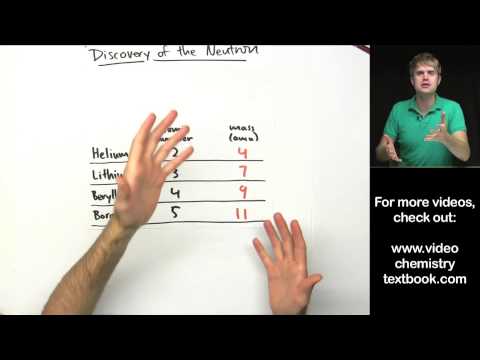 Tyler DeWitt
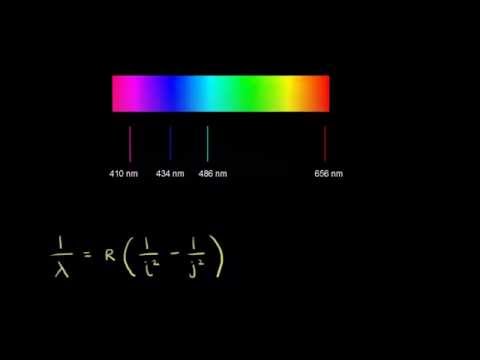 Khan Academy
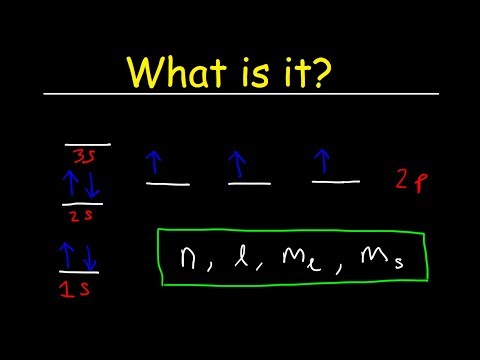 Organic Chemistry Tutor
 CrashCourse
 Tyler DeWitt